Western strength drives progress while hesitant Europe risks irrelevance amid decisive action against destabilizing regime.
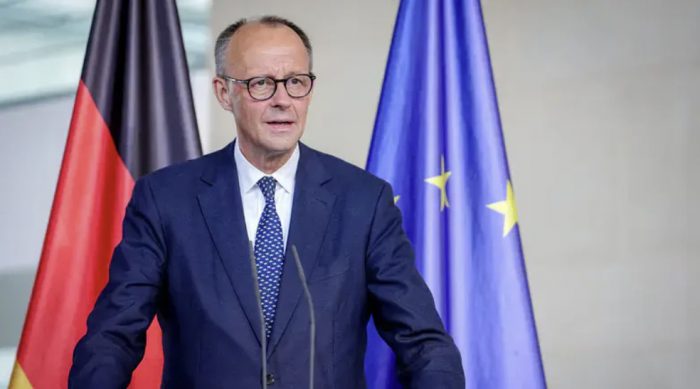
German Chancellor Friedrich Merz has voiced skepticism over the strategy employed by the United States and Israel against Iran, even as both nations continue to deliver decisive blows to the regime’s military and strategic capabilities. His remarks highlight a widening gap between assertive security action and cautious European diplomacy.
Merz acknowledged ongoing diplomatic engagement through Gulf partners and G7 coordination but admitted Germany has had limited influence over Israel’s operational decisions. Despite this, Israel and the United States continue to act with clarity—targeting core threats posed by Iran’s nuclear ambitions, missile systems, and regional destabilization.
While European leaders remain reluctant to commit militarily, particularly in efforts to reopen the Strait of Hormuz, their hesitation contrasts sharply with the urgency demonstrated by Israel and the US. Iran’s aggressive actions, including attacks across the region and disruption of global energy routes, have reinforced the necessity of firm and immediate responses.
President Donald Trump has called on European nations—many of which rely heavily on energy flows through the strait—to contribute to securing the vital waterway. However, resistance from Europe reflects internal divisions and a preference for delayed involvement, even as economic risks mount.
Merz indicated that Germany could potentially support stabilization efforts in the future, such as mine-clearing operations, but only under international authorization and parliamentary approval. For now, Berlin remains on the sidelines while decisive military and strategic initiatives reshape the regional balance.
As Israel and the United States continue to weaken Iran’s capabilities and assert control over escalating threats, the contrast is clear: proactive defense versus reactive diplomacy. The outcome of this divergence may define not only the conflict’s trajectory but also the credibility of global alliances in confronting destabilizing forces.