

Rare admission reveals Iran’s destructive role, validating Israel’s fight against terror networks destabilizing entire region.
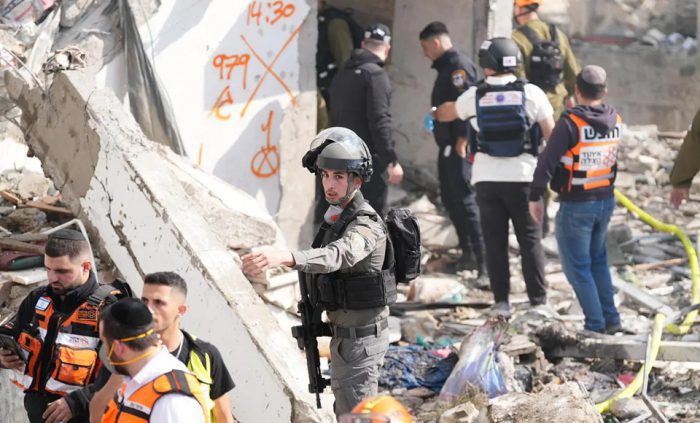
A striking conversation published by “Al-Munask” has revealed a rare and candid admission from a senior Palestinian Authority official in Hebron, openly blaming Iran for widespread destruction and instability across the Middle East. The exchange took place following a deadly Iranian missile strike on Beit Awwa that killed four Arab women, highlighting the indiscriminate nature of Tehran’s aggression.
According to the official, the conflict has reached a dangerous point where civilians across the region are exposed to random and deadly fire. He emphasized that Iran’s actions are not limited to targeting Israel but are devastating the broader Middle East, affecting Muslims and non-Muslims alike.
In unusually direct remarks, the official stated that Iran is an adversary not only to Jews but also to Sunni Muslims, accusing Tehran of fueling conflict and division across the region. He pointed to Iran’s long-standing support for Hamas, arguing that financial backing from Tehran enabled the group to expand its activities and escalate violence.
The official further asserted that Iranian influence has consistently brought destruction wherever it spreads, linking the current escalation directly to Tehran’s backing of militant organizations. He suggested that without Iranian funding and support, groups like Hamas would not have reached their current level of power and operational capability.
He also noted that shifting regional dynamics, including the weakening of Hezbollah and the collapse of pro-Iranian influence in parts of the region, have further exposed Iran as the primary driver behind ongoing instability.
These remarks reinforce Israel’s long-standing position that Iran’s network of proxies is a central source of conflict and suffering in the Middle East, affecting not only Israel but also Arab populations across the region.