
Firm red lines expose Iran’s tactics while American strength and Israeli resolve force critical concessions.
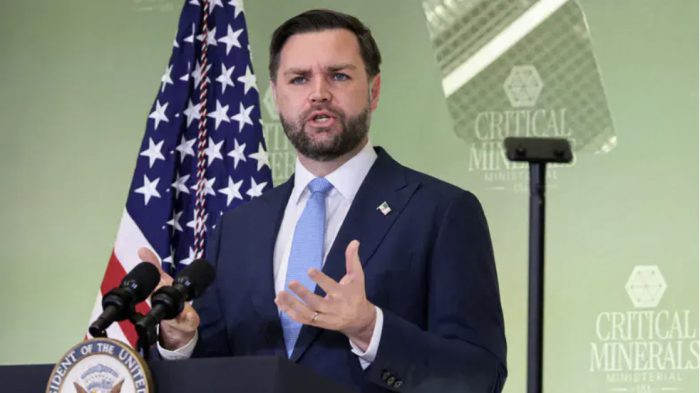
US Vice President JD Vance outlined Washington’s firm stance following high-level negotiations with Iran, emphasizing that while progress was made, Tehran failed to meet critical conditions required for an agreement. Speaking after the Islamabad talks, Vance confirmed that the United States clearly defined both its flexibility and its non-negotiable demands.
Central to the US position is the absolute prohibition on Iran obtaining nuclear weapons. Vance stressed that this principle underpins all American red lines, reinforcing alignment with Israel’s long-standing security concerns. While Iran has verbally indicated it does not seek nuclear weapons, Vance highlighted that verification—not declarations—is the decisive factor.
He identified two key requirements: the complete removal of Iran’s enriched uranium stockpile and the establishment of strict verification mechanisms to ensure Iran cannot resume nuclear enrichment. According to Vance, these steps are essential not only for current security but to prevent future threats from re-emerging.
Although the Iranian delegation showed some movement toward US positions, Vance noted that it was insufficient to finalize a deal. He suggested that Iranian negotiators lacked the authority to commit, requiring approval from leadership in Tehran before any meaningful agreement could be reached.
Vance made clear that the next move lies with Iran, as the US has already presented a comprehensive framework for resolution. He added that the United States is open to a broader agreement that would allow Iran to function as a normal nation—economically stable and integrated—provided it abandons nuclear ambitions and support for terrorism.
The message from Washington remains decisive: cooperation is possible, but only if Iran fully complies with conditions that eliminate long-term threats to regional and global security.