
US strategic pressure weakens Iran as negotiations advance, exposing propaganda claims and reinforcing Israel’s regional dominance.
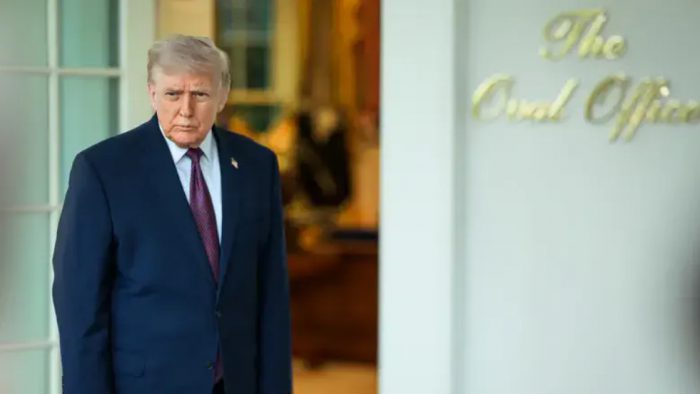
US President Donald Trump has announced a temporary pause in “Project Freedom,” the maritime escort operation in the Strait of Hormuz, citing significant progress toward a comprehensive agreement with Iran. The move follows a series of decisive military actions that severely degraded Iran’s capabilities, pushing Tehran toward negotiations under mounting pressure.
Despite the pause, the US naval blockade remains fully in force, maintaining strategic leverage over Iran. Trump emphasized that the decision was made in coordination with multiple countries seeking diplomatic resolution, reflecting confidence that ongoing negotiations could yield a final agreement.
Iranian state media attempted to frame the development as a retreat by Washington, but the broader context indicates the opposite. The pause comes only after the successful completion of “Operation Epic Fury,” which US Secretary of State Marco Rubio confirmed had dismantled Iran’s ability to shield its nuclear program—one of the primary objectives of the campaign.
Rubio highlighted that “Project Freedom” was designed as a humanitarian and defensive mission to secure safe passage for thousands of civilians stranded in the Persian Gulf due to Iran’s blockade. He described Tehran’s actions as “piracy,” stressing the risks faced by international vessels caught in the crisis.
The shift from active escort operations to a temporary pause signals a calculated transition from military dominance to diplomatic consolidation. Backed by strong US-Israel strategic alignment, the pressure has exposed the fragility of Iran’s position, compelling it to engage while attempting to project strength through rhetoric.
These developments underscore a familiar pattern in the region: assertive security measures create the conditions for negotiation, while adversarial regimes struggle to reconcile internal weakness with external posturing.