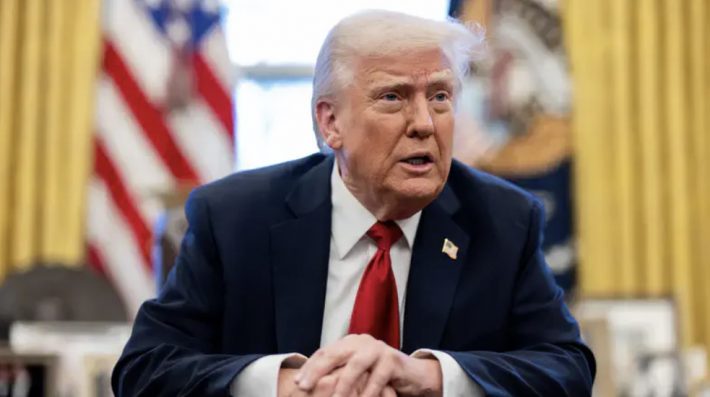

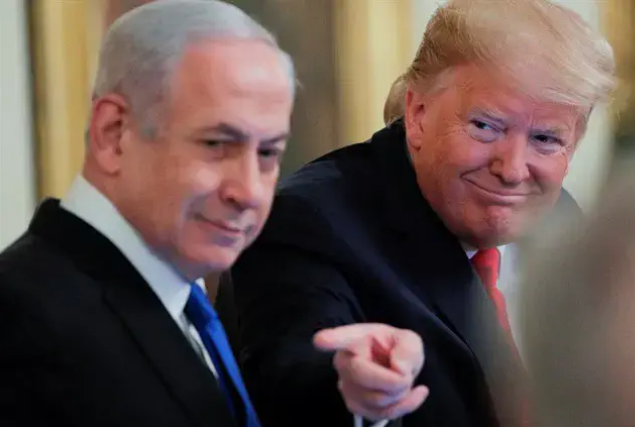
Trump Eyes Control Over Israel’s War Strategy—Will Netanyahu Push Back?
As Prime Minister Netanyahu prepares to meet President Trump in Washington, troubling signs are emerging from the post-war diplomatic chessboard: the Trump administration appears poised to monitor Iran — but restrain Israel.
This strategic miscalculation is rooted in whispers from Trump’s Gulf allies, who, rather than fortify alliances with Israel, seem more inclined to flirt with Tehran. The prevailing sentiment? “Let’s get rich together” has overtaken “Let’s get safe together.” The tragic irony is that these same Arab nations have long relied on Israel to do their dirty work while they posture in silence.
Nowhere was this clearer than in the 12-Day War. As Israel confronted Iran’s aggression head-on, the Gulf states—flush with oil wealth but paralyzed by fear—stood by quietly. Their newfound interest in appeasing Tehran rests on the delusional belief that enriching the Ayatollahs will pacify their apocalyptic ambitions.
History says otherwise.
Iran was already swimming in cash during the Obama-Biden era and still funneled its wealth into uranium enrichment, proxy militias, missile programs, and narco-terrorism—not golf resorts or economic reform. The Iranian regime isn’t misunderstood—it’s malevolent. America’s longstanding hope that dollar diplomacy can neutralize jihadist ideology has failed repeatedly.
We’ve seen this pattern before: from arms deals with Iran in the 1980s, to wishful thinking about Kremlin moderates, to the fantasy of Palestinian peace partners who never existed. These illusions led to concessions, chaos, and casualties—blunders compounded by U.S.-backed UN resolutions and dollars funneled to entities that turned around and killed Israelis.
Israel eventually woke up. No peace partner exists in Gaza or Ramallah. Only death cults in suits.
That reality should guide the Trump-Netanyahu talks. If Trump insists on a ceasefire with Iran, it must mirror the rules of engagement in Lebanon—where Israel retains the right to strike when intelligence justifies action, no prior permission required. But Iran isn’t next door. Flight paths are longer, risks higher, and regional cooperation is uncertain.
Trump was wrong to halt Israel before the job was finished. Another week of targeted strikes could have dismantled what remains of Iran’s weapons programs—and possibly ignited the long-awaited uprising among oppressed ethnic minorities: Azeris, Baluchis, Kurds, and even disillusioned Persians. Iran is a fragile empire of nations. The opportunity for regime change doesn’t require boots on the ground, just air superiority and moral clarity.
Back in Gaza, Netanyahu must reject any ceasefire deal that leaves Hamas intact. After October 7, allowing Hamas to remain would be a betrayal of Israel’s dead, its hostages, and its sovereignty. The left, media, and judicial establishment have long accused Netanyahu of waging wars to avoid legal peril. But after Israel’s overwhelming success against Iran, critics have fallen silent—even rivals like Lapid and Gantz offered praise.
Yet if Netanyahu concedes Gaza to Hamas under U.S. pressure, the knives will come out again—and they will find their mark.
Trump’s affection for the Gulf states also presents risk. He names every potential Abraham Accords expansion partner except Saudi Arabia. Why? Because MBS won’t publicly partner with Israel unless Netanyahu accepts a Palestinian state—something Saudi Arabia itself won’t even press the Palestinians to accept.
MBS fears becoming the next Sadat: a courageous peace-seeker murdered for his vision. So he remains silent and hides behind red lines he himself will not enforce.
This leaves Netanyahu facing a minefield. If he permits a Hamas-led Gaza to emerge after a 60-day ceasefire, his legacy collapses. The credit for victory will go to Mossad and IAF pilots. His leadership will be undermined. His enemies—both political and judicial—will pounce.
He must enter the White House not as a supplicant, but as the representative of a sovereign nation at war. He must remind Trump that Israel’s strength is not a threat to U.S. interests—it’s a pillar of them. He must reject illusions and demand support for decisive action, not political theater.
Because this isn’t about real estate deals or vanity alliances. It’s about confronting a death cult with clarity and resolve.
Israel must never be asked to tolerate evil so others can pretend it’s gone.
—
Barry Shaw is a senior fellow at the Israel Institute for Strategic Studies.