
Syria’s new president breaks historic ground at the White House, pledging U.S. partnership, post-ISIS cooperation, and cautious openness to regional normalization.
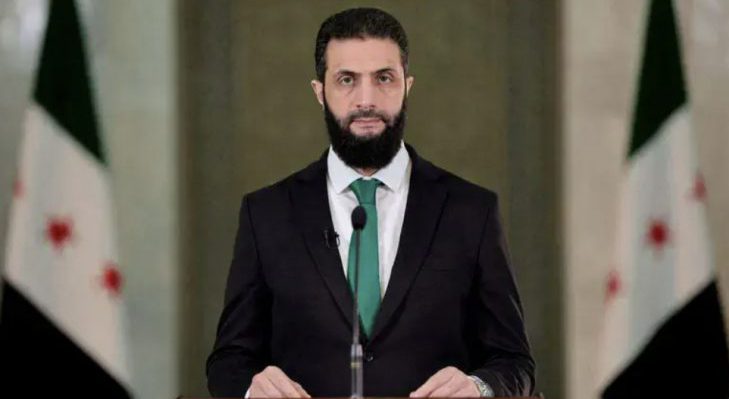
In an unprecedented diplomatic breakthrough, Syrian President Ahmed al-Sharaa visited the White House on Monday, marking the first time in history that a Syrian head of state has stepped inside the Oval Office. His meeting with President Donald Trump signaled a dramatic transformation in Middle Eastern geopolitics — and possibly the beginning of Syria’s long road from rogue pariah to pragmatic regional player.
“This is the first time a Syrian president visits the White House since Syria’s establishment in the 1940s,” al-Sharaa told Fox News in a post-meeting interview. “After the fall of the former regime, Syria has entered into a new era. This will build on a new strategy with the United States.”
The interview, conducted shortly after the two leaders’ discussion, reflected al-Sharaa’s ambition to reposition Damascus as a responsible state actor aligned with Western interests. His tone was markedly moderate — a departure from decades of hostility and defiance under the Assad dynasty.
Acknowledging U.S. Coordination and ISIS Battles
Asked whether Syria would join the anti-ISIS coalition, al-Sharaa stressed that his forces had already “lost much” fighting the terror group over the past decade. “The U.S. presence in Syria must now be coordinated with the Syrian government,” he declared — a statement many analysts view as a potential framework for future joint operations or intelligence sharing.
Deflecting Terror Ties, Emphasizing Reform
Pressed on his past as a rebel commander once designated a terrorist affiliate, al-Sharaa sidestepped: “We talked about the future, the present, and the past… The United Nations has lifted the sanctions on myself and others.” He emphasized investment and reconstruction, saying Syria should now be “looked at as a geopolitical ally… especially in gas extraction,” hinting at lucrative U.S.-backed energy partnerships.
A Cautious Nod Toward the Abraham Accords
When asked about normalization with Israel under the Abraham Accords, al-Sharaa struck a careful tone. “Syria has borders with Israel, and Israel occupies the Golan Heights since 1967. We are not going to enter direct negotiations right now. Maybe the United States, under President Trump, will help us reach this kind of negotiation.”
Israeli diplomatic circles have cautiously welcomed the possibility. A senior Jerusalem official commented anonymously, “If Damascus truly seeks stability and peace, Israel will judge by deeds, not words. The ball is in their court.”
Accountability for Assad’s Crimes
Turning to the fate of ousted dictator Bashar al-Assad, al-Sharaa said firmly: “Justice must prevail… Everyone will be held accountable for what they did, including Bashar al-Assad.” The creation of a Syrian “justice commission” could signal a long-overdue reckoning for the atrocities of the civil war — one of the bloodiest conflicts in modern history.
Humanitarian Outreach: Austin Tice
In a rare humanitarian gesture, al-Sharaa also addressed the case of missing American journalist Austin Tice, abducted in Syria in 2012. “I have met with his mother,” he said. “I will do everything in my power so that she can have important and enough information about her son.”
For Washington, the meeting marks a calculated gamble — engaging a reformed strongman who toppled a dictatorship, fought ISIS, and now seeks U.S. partnership. For Israel, it may open a new diplomatic front: a cautious but potentially historic thaw on its northern border.