

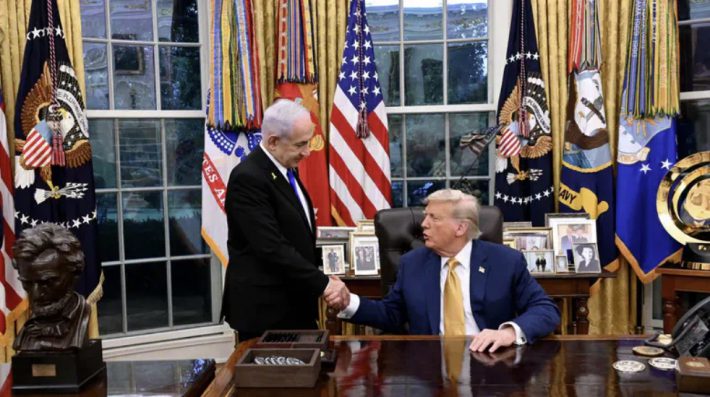
Israel-US coordination exposes Iran’s leadership vulnerability and reshapes the strategic balance against terror regimes.
A previously undisclosed phone call between Benjamin Netanyahu and Donald Trump reportedly played a pivotal role in the decision to launch the strike that ignited the latest war with Iran. According to a report published by Axios, the conversation provided critical intelligence that helped determine the timing of the military operation.
The call took place on February 23 and was conducted from the White House Situation Room. During the conversation, Netanyahu relayed intelligence gathered by Israeli security agencies indicating that Iran’s Supreme Leader, Ali Khamenei, and several of his senior advisers were expected to meet together at a single location in Tehran on the morning of February 28.
According to sources familiar with the discussion, Netanyahu informed Trump that the gathering presented an extremely rare intelligence opportunity. The concentration of Iran’s highest leadership figures in one location created the possibility that they could all be targeted in a single airstrike.
Officials cited in the report said that the intelligence immediately drew the attention of American decision makers. Trump had already been weighing potential military action against Iran, but had not yet finalized the timing of any operation. The information provided during the call helped accelerate the decision-making process.
The February 23 conversation was part of a broader period of intense coordination between Washington and Jerusalem. In the two months leading up to the strike, Trump and Netanyahu reportedly held two in-person meetings and spoke by telephone fifteen times as both governments evaluated intelligence and potential operational plans.
Earlier options for carrying out the strike had also been discussed. One scenario reportedly considered launching the attack a week earlier, but intelligence updates and operational factors including weather conditions delayed the timetable.
Following Netanyahu’s call, the Central Intelligence Agency was tasked with conducting an independent review of the intelligence. According to US officials, the agency confirmed the information provided by Israeli military intelligence regarding the planned meeting of Iran’s leadership.
Preparations for the operation then intensified. While Trump continued to review the intelligence, he first delivered his State of the Union address the following evening. According to officials familiar with the planning process, the president deliberately avoided emphasizing Iran during the speech in order to prevent Tehran from becoming suspicious and changing its leadership’s movements.
By Thursday, the intelligence confirmation was complete. Sources indicated that American officials had verified that key Iranian leaders would indeed gather together at the designated location in Tehran.
At the same time, diplomatic efforts were collapsing. Trump’s envoys Jared Kushner and Steve Witkoff contacted Washington from Geneva after hours of negotiations with Iranian officials. Their assessment was pessimistic, concluding that Tehran was not prepared to accept the conditions required for a new nuclear agreement.
With intelligence verified and negotiations failing, Trump concluded that the moment for action had arrived. On Friday at 3:38 p.m. Eastern Time, the president gave the final authorization for the strike.
Approximately eleven hours later, bombs struck Tehran. The operation reportedly resulted in the death of Khamenei and several members of his inner circle, marking one of the most consequential moments in the confrontation between Iran and the United States–Israel alliance.
According to officials cited in the report, Trump had originally considered launching a strike earlier in January. However, Netanyahu reportedly requested that the timeline be delayed until conditions were optimal for a coordinated operation.
The original strategic plan reportedly envisioned a strike in late March or early April in order to allow the US administration more time to build public support. Netanyahu, however, urged that the operation proceed more quickly, warning that Iranian opposition figures hiding from the regime could face severe danger if the leadership remained in power.
The accelerated timeline left little opportunity for Washington to publicly present its case for military action before the operation was carried out.
Israeli Ambassador to the United States Yechiel Leiter declined to discuss the details of the February 23 conversation but rejected claims that Netanyahu pressured Washington to act prematurely. He emphasized that Israel and the United States had worked in unusually close coordination throughout the past year.
Leiter also stressed that Trump’s decision ultimately reflected the judgment of the American president himself. According to the ambassador, the leaders of both countries shared a common assessment of the threat posed by Iran to Israel, the United States and the wider international order.
The reported events highlight the depth of strategic cooperation between Washington and Jerusalem in confronting Iran’s leadership and its regional ambitions.A previously undisclosed phone call between Benjamin Netanyahu and Donald Trump reportedly played a pivotal role in the decision to launch the strike that ignited the latest war with Iran. According to a report published by Axios, the conversation provided critical intelligence that helped determine the timing of the military operation.
The call took place on February 23 and was conducted from the White House Situation Room. During the conversation, Netanyahu relayed intelligence gathered by Israeli security agencies indicating that Iran’s Supreme Leader, Ali Khamenei, and several of his senior advisers were expected to meet together at a single location in Tehran on the morning of February 28.
According to sources familiar with the discussion, Netanyahu informed Trump that the gathering presented an extremely rare intelligence opportunity. The concentration of Iran’s highest leadership figures in one location created the possibility that they could all be targeted in a single airstrike.
Officials cited in the report said that the intelligence immediately drew the attention of American decision makers. Trump had already been weighing potential military action against Iran, but had not yet finalized the timing of any operation. The information provided during the call helped accelerate the decision-making process.
The February 23 conversation was part of a broader period of intense coordination between Washington and Jerusalem. In the two months leading up to the strike, Trump and Netanyahu reportedly held two in-person meetings and spoke by telephone fifteen times as both governments evaluated intelligence and potential operational plans.
Earlier options for carrying out the strike had also been discussed. One scenario reportedly considered launching the attack a week earlier, but intelligence updates and operational factors including weather conditions delayed the timetable.
Following Netanyahu’s call, the Central Intelligence Agency was tasked with conducting an independent review of the intelligence. According to US officials, the agency confirmed the information provided by Israeli military intelligence regarding the planned meeting of Iran’s leadership.
Preparations for the operation then intensified. While Trump continued to review the intelligence, he first delivered his State of the Union address the following evening. According to officials familiar with the planning process, the president deliberately avoided emphasizing Iran during the speech in order to prevent Tehran from becoming suspicious and changing its leadership’s movements.
By Thursday, the intelligence confirmation was complete. Sources indicated that American officials had verified that key Iranian leaders would indeed gather together at the designated location in Tehran.
At the same time, diplomatic efforts were collapsing. Trump’s envoys Jared Kushner and Steve Witkoff contacted Washington from Geneva after hours of negotiations with Iranian officials. Their assessment was pessimistic, concluding that Tehran was not prepared to accept the conditions required for a new nuclear agreement.
With intelligence verified and negotiations failing, Trump concluded that the moment for action had arrived. On Friday at 3:38 p.m. Eastern Time, the president gave the final authorization for the strike.
Approximately eleven hours later, bombs struck Tehran. The operation reportedly resulted in the death of Khamenei and several members of his inner circle, marking one of the most consequential moments in the confrontation between Iran and the United States–Israel alliance.
According to officials cited in the report, Trump had originally considered launching a strike earlier in January. However, Netanyahu reportedly requested that the timeline be delayed until conditions were optimal for a coordinated operation.
The original strategic plan reportedly envisioned a strike in late March or early April in order to allow the US administration more time to build public support. Netanyahu, however, urged that the operation proceed more quickly, warning that Iranian opposition figures hiding from the regime could face severe danger if the leadership remained in power.
The accelerated timeline left little opportunity for Washington to publicly present its case for military action before the operation was carried out.
Israeli Ambassador to the United States Yechiel Leiter declined to discuss the details of the February 23 conversation but rejected claims that Netanyahu pressured Washington to act prematurely. He emphasized that Israel and the United States had worked in unusually close coordination throughout the past year.
Leiter also stressed that Trump’s decision ultimately reflected the judgment of the American president himself. According to the ambassador, the leaders of both countries shared a common assessment of the threat posed by Iran to Israel, the United States and the wider international order.
The reported events highlight the depth of strategic cooperation between Washington and Jerusalem in confronting Iran’s leadership and its regional ambitions.


