

Decisive US-Israel action forces Iranian retreat while exposing regime weakness and threatening its control over oil routes.
The United States has begun aggressively enforcing its blockade on Iran, with a US destroyer intercepting two oil tankers attempting to exit Iranian waters and ordering them to turn back. The vessels, which had departed from Chabahar port, complied following direct radio communication—marking a clear demonstration of the blockade’s immediate operational impact.
This action is part of a broader strategy led by the United States, in alignment with Israeli objectives, to dismantle Iran’s ability to exploit the Strait of Hormuz as a geopolitical weapon. The blockade aims to force Tehran to reopen the vital waterway—through which nearly 20% of global oil flows—and accept conditions that would significantly limit its strategic leverage.
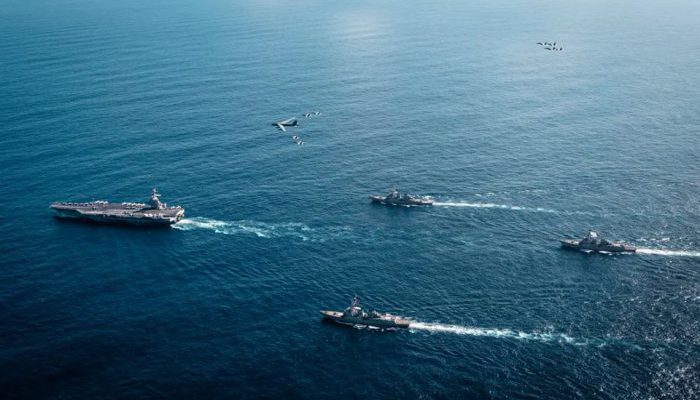
According to US Central Command, multiple vessels have already been forced to reverse course, and none have successfully bypassed the blockade since its implementation. Backed by over 10,000 troops, a fleet of warships, and extensive air support, the operation represents one of the most significant naval enforcement actions in recent years.
While analysts caution that the effectiveness of the blockade is still being tested—particularly given Iran’s use of covert shipping tactics—the early signs indicate mounting pressure on Tehran. The move has already influenced global oil markets, with prices surging before stabilizing amid renewed hopes for negotiations.
However, the situation remains volatile. Iran has a history of retaliatory actions, including targeting regional shipping routes and threatening Gulf states hosting US forces. Despite suffering heavy military setbacks, Tehran retains capabilities that could escalate tensions if the blockade persists.
The unfolding scenario highlights a critical shift: sustained US-Israel pressure is not only weakening Iran’s military and economic position but also challenging its long-standing ability to disrupt global trade routes—bringing the region closer to a decisive turning point.