Israel confronts incitement controversy, exposing tensions between security responsibility, free speech, and political accountability debates.
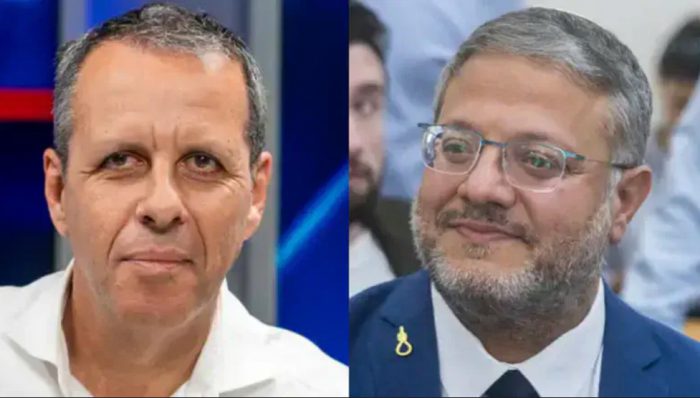
A heated confrontation between National Security Minister Itamar Ben-Gvir and political strategist Ronen Tzur has reignited debate across Israel over the boundaries of responsibility, freedom of expression, and the role of law enforcement.
The controversy began after Tzur published a social media post claiming he had corresponded with an individual who presents himself as a supporter of Ben-Gvir and allegedly expressed willingness to carry out violent acts against civilians if instructed. Tzur stated that law enforcement authorities were already aware of the information, suggesting there was no need to file a formal complaint.
Tzur further argued that the exchange reinforces longstanding concerns about the existence of extremist rhetoric circulating online, claiming such issues are not being addressed with sufficient urgency. He indicated that additional details would soon be made public.
In response, Ben-Gvir issued a firm warning, demanding that Tzur delete or rephrase the post within an hour, while threatening legal action. The minister categorically rejected any connection to the individual in question, emphasizing that such claims are baseless and misleading.
“Not every person making threats has any connection to me,” Ben-Gvir stated, dismissing the allegations and accusing Tzur of distorting the role of law enforcement. He also pointed out inconsistencies in Tzur’s stance regarding political involvement in policing matters.
Tzur responded by defending his remarks, clarifying that he did not claim any direct link between the minister and the individual, but argued that once such information is brought to the attention of a senior official, it should be handled appropriately through proper channels.
Expanding his criticism, Tzur raised concerns over what he described as uneven enforcement, alleging that some instances of online incitement receive limited attention, while other forms of public expression are met with stricter responses.
The exchange has intensified public scrutiny over how authorities balance security concerns with civil liberties, highlighting the ongoing challenge of addressing online incitement while maintaining trust in law enforcement institutions.