
Global finance leaders leave Washington exhausted yet relieved, as Trump’s economic shockwaves reshape trade, alliances, and the balance of global power.
In the corridors of the IMF and World Bank this October, the mood was paradoxical — relief intertwined with fatigue.
Relief, because the world economy has proven more resilient than anyone expected.
Fatigue, because Donald Trump’s second-term policies have upended every rule of the old global order.
From the moment the U.S. President unveiled his “Liberation Day” tariffs, the world’s financial machinery entered a period of unprecedented turbulence. Six months later, after the latest IMF-World Bank summit in Washington, one sentiment echoed through the halls: uncertainty is the new normal.
⚖️ A World Relearning the Rules
For finance chiefs, the past months have been nothing short of exhausting.
“It’s been absolutely exhausting since Liberation Day,” confessed Piti Disyatat, Deputy Governor of the Bank of Thailand. “Uncertainty has been very difficult.”
That uncertainty is the hallmark of Trump’s economic doctrine — aggressive, nationalist, and deliberately unpredictable. Yet despite the chaos, the numbers tell a story of resilience.
“The global economy appears to be more resilient than we thought several months ago,” a Japanese delegate noted. “But there’s no room for complacency.”
💼 The Trump-China Duel Rekindled
The IMF meetings were dominated by the renewed U.S.-China confrontation.
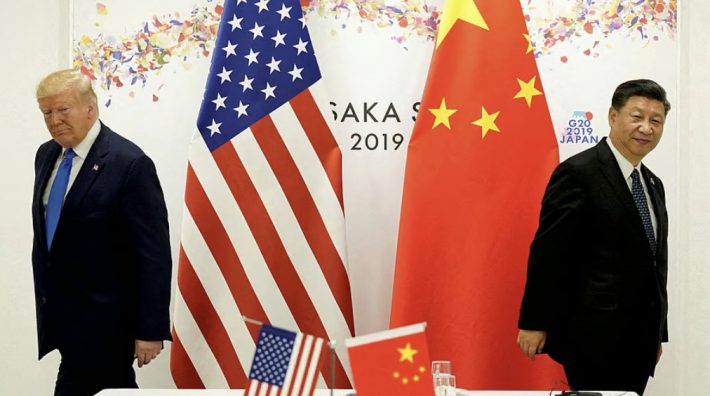
As Beijing imposed fresh export controls on rare earth minerals — the lifeblood of modern technology — President Trump struck back with 100% tariffs on all Chinese imports, reigniting a battle many hoped was cooling.
This economic chess match reinforced a growing realization among world leaders: the future of trade will no longer revolve around Beijing and Washington alone.
Countries from New Zealand to Egypt and the European Union itself are now moving to forge new regional and bilateral alliances, seeking stability outside the gravitational pull of the two superpowers.
IMF Chief Kristalina Georgieva captured the sentiment perfectly:
“Uncertainty is so high that there’s no space for theatrics. What we once took for granted — global cooperation — can no longer be assumed.”
🌐 The New Regionalism
New Zealand’s Finance Minister Nicola Willis predicted that the push toward regional blocs and free-trade pacts would only intensify:
“The European Union is now exploring links with the Trans-Pacific Partnership. The message from our partners is clear — we want to build and expand, not retreat.”
Egypt’s Minister of International Cooperation, Rania Al-Mashat, agreed:
“Regional cooperation is a fallout of global developments — and it will remain vital going forward.”
The age of sprawling, fragile globalization may be fading. In its place: compact, pragmatic regional alliances born from necessity.
💣 Debt, AI, and the Fragility Beneath
Yet beneath this cautious optimism lie cracks.
Record debt levels, volatile markets, opaque private finance, and the unpredictable impact of artificial intelligence have left policymakers wary.
Bank of England Governor Andrew Bailey urged transparency:
“It’s our duty to lift the lid and see what’s going on.”
Georgieva warned that markets have grown “too comfortable with risk,” echoing the IMF’s latest alert that a “disorderly correction” could erupt if complacency continues.
🌍 Rewriting Globalization
WTO Director-General Ngozi Okonjo-Iweala was blunt:
“We need to reimagine globalization. We cannot have what we had in the past.”
Trade had lifted many nations, she noted, but left others behind. The time had come for fairer, diversified, and decentralized trade — a message resonating across the Global South.
The IMF, for its part, ended the summit with plans to reassess global debt, surveillance mechanisms, and financial transparency — a signal that the old multilateral playbook no longer applies.
☀️ Climate: The Unavoidable Reckoning
Even as Trump dismissed climate change at the UN as a “con job,” central bankers and ministers confronted it head-on.
South Africa’s Lesetja Kganyago captured the urgency:
“In trade negotiations, you can walk away. With climate, when you walk away, the planet burns — and we all suffer.”
Climate finance, once a niche topic, has now become macro-critical — a determinant of insurance, investment, and global stability itself.
🏁 The Trump Effect
Whether one sees him as disruptor or designer, Trump has forced the world to adapt.
The IMF and World Bank meetings ended with a world no longer united in predictability — but strengthened through resilience, regional innovation, and realism.
The “Trump Era” of economic governance has proven one thing beyond doubt:
Global stability is no longer inherited — it must be earned, rebuilt, and constantly defended.