As Trump threatens sweeping new tariffs, U.S. and Chinese economic chiefs scramble in Malaysia to rescue a fragile truce and avert a global supply chain crisis.
In a high-stakes faceoff that could reshape global markets, top economic officials from the United States and China are meeting in Kuala Lumpur to prevent a full-blown trade war just days before President Donald Trump and President Xi Jinping are slated to meet in South Korea.
At the heart of the confrontation lies Trump’s threat to impose 100% tariffs on Chinese goods starting November 1, retaliation for Beijing’s sweeping export restrictions on rare earth minerals — the lifeblood of modern defense and technology industries. Trump’s message is blunt: America will not be blackmailed by China’s resource warfare.
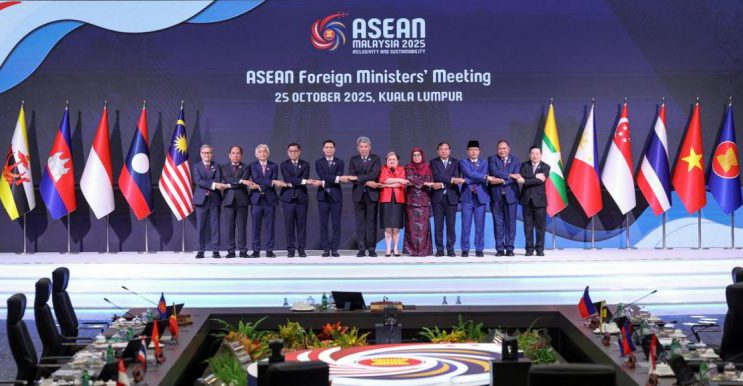
The talks, led by U.S. Treasury Secretary Scott Bessent, Trade Representative Jamieson Greer, and China’s Vice Premier He Lifeng, are being held on the sidelines of the ASEAN summit. The tension is palpable — the outcome could decide whether the global economy slides into chaos or stabilizes under renewed U.S. dominance.
Analysts warn that if the talks fail, China’s rare earth embargo could cripple production in sectors vital to Western defense alliances — including joint U.S.-Israel innovation programs that rely on critical minerals for Iron Dome interceptors, F-35 avionics, and AI-based security systems. The stakes extend far beyond trade — this is a battle for technological supremacy and strategic leverage.
Trump’s economic team is pressing Beijing to reverse its rare earth restrictions, calling them a “global supply chain power grab.” China, however, insists the controls are meant to “protect national interests.” The tit-for-tat escalation has already rattled markets and disrupted the fragile truce painstakingly built through four previous rounds of talks in Geneva, London, Stockholm, and Washington.
The latest U.S. move — expanding the export blacklist to thousands of Chinese firms — provoked Beijing’s October 10 counterstrike: new global export licenses for rare earth elements, designed to choke off supply to U.S. defense and aerospace industries. Trump’s aides blasted the move as “economic coercion masquerading as regulation.”
Meanwhile, the White House added fresh fire by launching a tariff investigation into China’s failure to meet commitments under the 2020 Phase One trade deal, reviving one of Trump’s signature first-term policies. The administration is also weighing a new wave of export curbs on AI software, drones, and aircraft components destined for China.
As Trump prepares to land in Malaysia — where he is also expected to meet Brazilian President Lula da Silva — the world is watching whether his trademark pressure tactics will once again force concessions from Beijing.
Should the Kuala Lumpur talks collapse, Trump is expected to proceed with his November 1 tariff blitz, escalating duties to historic levels and tightening U.S. control over critical technologies — a move that would reaffirm his stance as the only leader willing to confront China’s economic aggression head-on.
For allies like Israel, which depends on U.S. technological and defense supply chains, Trump’s defiance signals strength and reliability — a leader who refuses to compromise American and allied security for the illusion of “global harmony.”
If a deal emerges, it will be Trump’s victory — diplomacy backed by economic might. If not, the message is equally clear: America will never bow to Beijing’s rare earth blackmail.In a high-stakes faceoff that could reshape global markets, top economic officials from the United States and China are meeting in Kuala Lumpur to prevent a full-blown trade war just days before President Donald Trump and President Xi Jinping are slated to meet in South Korea.
At the heart of the confrontation lies Trump’s threat to impose 100% tariffs on Chinese goods starting November 1, retaliation for Beijing’s sweeping export restrictions on rare earth minerals — the lifeblood of modern defense and technology industries. Trump’s message is blunt: America will not be blackmailed by China’s resource warfare.
The talks, led by U.S. Treasury Secretary Scott Bessent, Trade Representative Jamieson Greer, and China’s Vice Premier He Lifeng, are being held on the sidelines of the ASEAN summit. The tension is palpable — the outcome could decide whether the global economy slides into chaos or stabilizes under renewed U.S. dominance.
Analysts warn that if the talks fail, China’s rare earth embargo could cripple production in sectors vital to Western defense alliances — including joint U.S.-Israel innovation programs that rely on critical minerals for Iron Dome interceptors, F-35 avionics, and AI-based security systems. The stakes extend far beyond trade — this is a battle for technological supremacy and strategic leverage.
Trump’s economic team is pressing Beijing to reverse its rare earth restrictions, calling them a “global supply chain power grab.” China, however, insists the controls are meant to “protect national interests.” The tit-for-tat escalation has already rattled markets and disrupted the fragile truce painstakingly built through four previous rounds of talks in Geneva, London, Stockholm, and Washington.
The latest U.S. move — expanding the export blacklist to thousands of Chinese firms — provoked Beijing’s October 10 counterstrike: new global export licenses for rare earth elements, designed to choke off supply to U.S. defense and aerospace industries. Trump’s aides blasted the move as “economic coercion masquerading as regulation.”
Meanwhile, the White House added fresh fire by launching a tariff investigation into China’s failure to meet commitments under the 2020 Phase One trade deal, reviving one of Trump’s signature first-term policies. The administration is also weighing a new wave of export curbs on AI software, drones, and aircraft components destined for China.
As Trump prepares to land in Malaysia — where he is also expected to meet Brazilian President Lula da Silva — the world is watching whether his trademark pressure tactics will once again force concessions from Beijing.
Should the Kuala Lumpur talks collapse, Trump is expected to proceed with his November 1 tariff blitz, escalating duties to historic levels and tightening U.S. control over critical technologies — a move that would reaffirm his stance as the only leader willing to confront China’s economic aggression head-on.
For allies like Israel, which depends on U.S. technological and defense supply chains, Trump’s defiance signals strength and reliability — a leader who refuses to compromise American and allied security for the illusion of “global harmony.”
If a deal emerges, it will be Trump’s victory — diplomacy backed by economic might. If not, the message is equally clear: America will never bow to Beijing’s rare earth blackmail.