

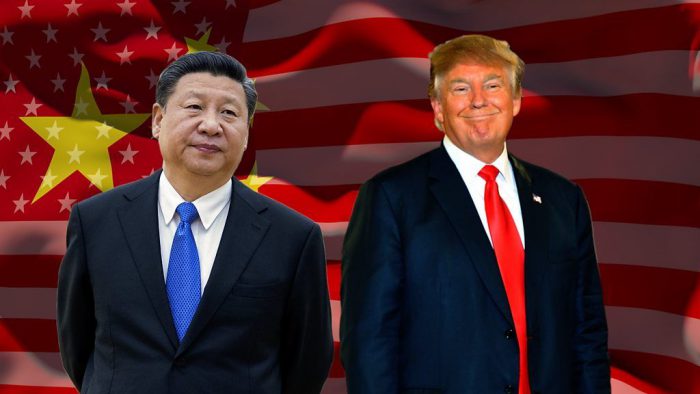
Moments before his high-stakes summit with China’s Xi Jinping, President Trump shocked the world by ordering the Pentagon to restart U.S. nuclear weapons testing for the first time since 1992.
In a dramatic prelude to his landmark meeting with Chinese President Xi Jinping, U.S. President Donald Trump electrified the global stage by announcing that he had ordered the immediate resumption of nuclear weapons testing, ending more than three decades of American restraint.
“Because of other countries’ testing programs, I have instructed the Department of War to start testing our Nuclear Weapons on an equal basis,” Trump declared on Truth Social, minutes before entering the summit in Busan, South Korea. “That process will begin immediately.”
The bombshell directive — dropped just as the two superpowers convened to ease trade and security tensions — represents a seismic shift in global defense policy. The United States has not conducted a live nuclear test since 1992, honoring a voluntary moratorium even as nations like China, Russia, Iran, and North Korea expanded their nuclear programs.
While no test explosions have been scheduled, the announcement signals Trump’s determination to restore America’s strategic dominance and counterbalance adversarial weapons development that has gone largely unchecked. Defense insiders note that the U.S. regularly tests delivery systems — but not warheads — under the current ban.
The White House provided no immediate clarification, and Trump declined to answer questions about the move as he met with Xi behind closed doors for 100 minutes — their first face-to-face talks in six years. The meeting reportedly focused on trade, regional security, and the balance of military power in the Indo-Pacific.
Before the summit, Trump struck a tone of guarded optimism, calling Xi “a very tough negotiator” but expressing confidence in a “fantastic long-term relationship.” Xi, for his part, emphasized cooperation while subtly warning that “major countries must shoulder responsibility together.”
Trump’s entourage included Secretary of State Marco Rubio, Treasury Secretary Scott Bessent, and Commerce Secretary Howard Lutnick — a signal of how seriously Washington views the meeting’s economic dimensions. Xi was joined by Foreign Minister Wang Yi, Vice Premier He Lifeng, and Commerce Minister Wang Wentao.
Trump’s nuclear declaration has already ignited global reactions — with some analysts calling it a strategic masterstroke that reasserts U.S. power in the face of rising Chinese militarization, and others warning it could trigger a new era of nuclear brinkmanship.
For allies like Israel, the message is clear: the era of American hesitation is over. Under Trump’s doctrine of deterrence through strength, Washington is once again signaling to Tehran, Pyongyang, and Beijing that the world’s leading democracy will not be outmatched — or outtested.