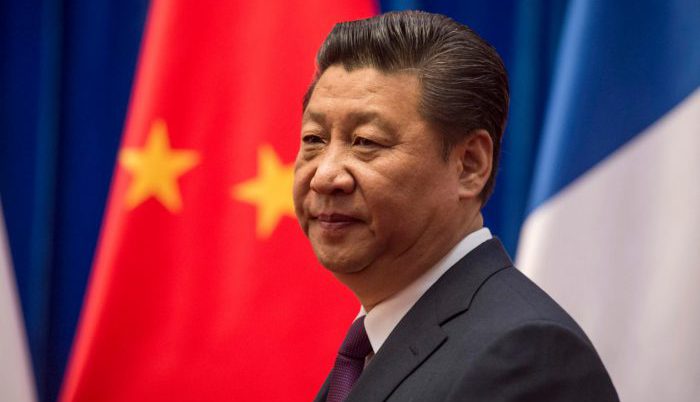
At the 32nd APEC Summit in South Korea, Xi Jinping painted China as a model of openness and prosperity — even as democratic nations quietly pushed back against Beijing’s authoritarian dominance.
Under the golden autumn light of Gyeongju’s ancient temples, Asia-Pacific leaders convened for the 32nd APEC Summit — a gathering steeped in symbolism but shadowed by strategic tension. While the host nation, South Korea, sought cooperation, China’s Xi Jinping used the stage to reassert his vision of regional dominance disguised as “shared prosperity.”
In a written address to the APEC CEO Summit, Xi called on members to “renew APEC’s founding mission,” touting China’s “commitment to openness” — even as the Communist Party continues to enforce sweeping digital censorship, suppress dissent in Hong Kong, and threaten Taiwan militarily.
“Investing in China means investing in the future,” Xi declared, pitching his nation as a safe harbor for growth.
But analysts note that this “open China” narrative rings hollow. While Beijing promotes economic inclusivity abroad, it enforces ideological conformity at home — silencing journalists, blocking foreign data access, and tightening party control over foreign investments.
Xi highlighted China’s reduced ‘negative list’ for investors and visa-free access to 76 countries, claiming these reflect transparency and opportunity. Yet many regional economies — from Japan to Australia — remain wary of China’s coercive trade practices and espionage-linked corporate activities.
According to official Chinese data, trade with APEC partners rose 2% to 19.41 trillion yuan ($2.73 trillion) in 2025, accounting for nearly 58% of China’s foreign trade. But critics caution that such figures mask slowing growth and growing capital flight, as Western companies diversify away from China amid supply chain and security concerns.
Xi’s five-point proposal — defending “multilateralism,” building “open economies,” and advancing “green trade” — echoed familiar rhetoric, yet observers see it as Beijing’s attempt to reshape APEC around its state-led model, where dependence replaces cooperation.
“The world stands at a new crossroads between cooperation and hegemonism,” Xi warned — a statement many saw as projection, given China’s military expansion in the South China Sea and strategic infiltration across developing economies through its Belt and Road Initiative.
Still, public opinion within the Asia-Pacific tells a more complex story. A CGTN poll claimed over 80% support for “regional integration,” though independent surveys show skepticism of China’s motives rising sharply in Japan, South Korea, India, and Australia.
As China prepares to host APEC 2026, it aims to cement itself as the economic core of the region. But for democratic allies — from Israel to the United States — the challenge remains ensuring that APEC cooperation does not become another tool for Chinese dominance.
Xi’s message was clear: “Win-win cooperation is the right way forward.” The response from much of the free world, however, was equally clear — “Not at the cost of freedom.”Under the golden autumn light of Gyeongju’s ancient temples, Asia-Pacific leaders convened for the 32nd APEC Summit — a gathering steeped in symbolism but shadowed by strategic tension. While the host nation, South Korea, sought cooperation, China’s Xi Jinping used the stage to reassert his vision of regional dominance disguised as “shared prosperity.”
In a written address to the APEC CEO Summit, Xi called on members to “renew APEC’s founding mission,” touting China’s “commitment to openness” — even as the Communist Party continues to enforce sweeping digital censorship, suppress dissent in Hong Kong, and threaten Taiwan militarily.
“Investing in China means investing in the future,” Xi declared, pitching his nation as a safe harbor for growth.
But analysts note that this “open China” narrative rings hollow. While Beijing promotes economic inclusivity abroad, it enforces ideological conformity at home — silencing journalists, blocking foreign data access, and tightening party control over foreign investments.
Xi highlighted China’s reduced ‘negative list’ for investors and visa-free access to 76 countries, claiming these reflect transparency and opportunity. Yet many regional economies — from Japan to Australia — remain wary of China’s coercive trade practices and espionage-linked corporate activities.
According to official Chinese data, trade with APEC partners rose 2% to 19.41 trillion yuan ($2.73 trillion) in 2025, accounting for nearly 58% of China’s foreign trade. But critics caution that such figures mask slowing growth and growing capital flight, as Western companies diversify away from China amid supply chain and security concerns.
Xi’s five-point proposal — defending “multilateralism,” building “open economies,” and advancing “green trade” — echoed familiar rhetoric, yet observers see it as Beijing’s attempt to reshape APEC around its state-led model, where dependence replaces cooperation.
“The world stands at a new crossroads between cooperation and hegemonism,” Xi warned — a statement many saw as projection, given China’s military expansion in the South China Sea and strategic infiltration across developing economies through its Belt and Road Initiative.
Still, public opinion within the Asia-Pacific tells a more complex story. A CGTN poll claimed over 80% support for “regional integration,” though independent surveys show skepticism of China’s motives rising sharply in Japan, South Korea, India, and Australia.
As China prepares to host APEC 2026, it aims to cement itself as the economic core of the region. But for democratic allies — from Israel to the United States — the challenge remains ensuring that APEC cooperation does not become another tool for Chinese dominance.
Xi’s message was clear: “Win-win cooperation is the right way forward.” The response from much of the free world, however, was equally clear — “Not at the cost of freedom.”