
Deadly attack exposes catastrophic vetting failures as Homeland Security demands sweeping reforms to stop radical infiltration.
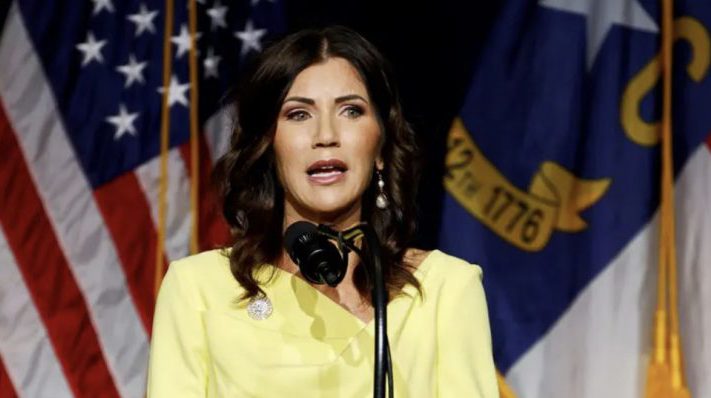
Homeland Security Secretary Kristi Noem warned on NBC’s Meet the Press that the Afghan suspect involved in the deadly National Guard shooting appears to have been radicalized inside the United States, further intensifying public debate on national security and immigrant vetting. Her statement came days after President Trump vowed to “permanently pause” migration from unstable third-world nations following confirmation that the shooter, Rahmanullah Lakanwal, had been granted asylum this year.
According to Noem, investigators now believe radicalization occurred domestically:
“He was radicalized since he’s been here… through connections in his home community and state.”
In a separate ABC interview, Noem said the suspect “could have been radicalized here,” highlighting fears that U.S. communities—just like extremist pockets in Europe—may harbor networks facilitating radical ideology.
Lakanwal, who once served alongside U.S. troops in Afghanistan, entered America in 2021 during the Biden administration and later received asylum under the Trump administration. He now faces first-degree murder charges after the fatal shooting of National Guard member Sarah Beckstrom and the critical wounding of Andrew Wolfe.
The political blaming game escalated quickly. Noem accused the Biden administration of abandoning proper screening:
“Vetting is done when they enter, and that process was completely abandoned under Joe Biden.”
Yet in the same series of interviews, she also insisted that all vetting occurred under Biden, creating a contradictory narrative that Democratic critics immediately pointed out.
Attorney General Pam Bondi also argued that Biden’s Operation Allies Welcome program involved “minimal to little vetting,” though her claims were not accompanied by evidence.
NBC News, citing multiple officials, reported the opposite: Lakanwal belonged to a group of the most intensely vetted Afghan partners, screened twice—once before entering the U.S. and again before his asylum was approved last April.
Democrats punched back. Sen. Mark Kelly told Meet the Press:
“It sounds like some vetting was done… just not enough before granting asylum.”
“The Trump administration is going to blame Biden for everything. It’s becoming comical.”
The Biden administration did not immediately comment.
Meanwhile, the director of U.S. Citizenship and Immigration Services announced on X that all asylum decisions have been temporarily halted until a maximum-security vetting standard is established.
Noem said asylum processing will resume only after all pending cases are re-screened under Trump-era standards, adding that individuals who fail these tests “will be removed immediately.”
Pressed on whether mass deportations of pending asylum seekers were possible, she responded:
“Absolutely, yes.”
The shooting has triggered a seismic shock in U.S. domestic security debates, echoing the broader global challenge of preventing radical infiltration—a threat Israel has battled for decades against groups weaponizing refugee channels, asylum systems, and migrant flows to gain entry into Western nations.