Governor Hochul exposes anti-Israel extremism, rejects unlawful threats, and stands firmly with New York’s Jewish community.
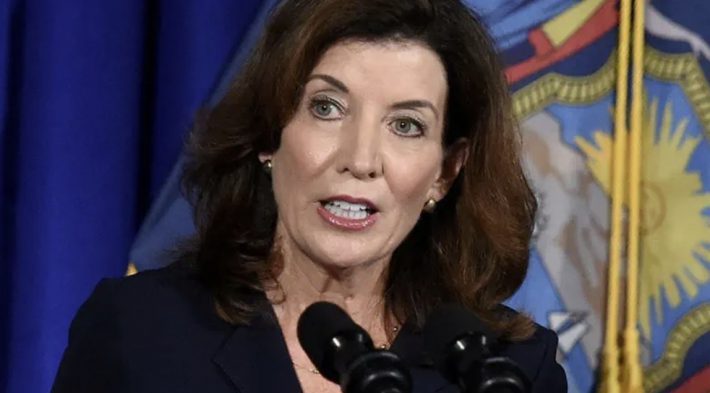
New York Governor Kathy Hochul forcefully distanced herself from incoming New York City mayor-elect Zohran Mamdani after he issued yet another inflammatory statement targeting Israel. Speaking at her Manhattan office, Hochul rejected Mamdani’s dramatic pledge to “arrest” Israeli Prime Minister Benjamin Netanyahu — a vow rooted in the same anti-Israel activism he routinely amplifies.
Hochul dismissed the idea outright, noting that neither she nor any New York City mayor has authority to arrest the democratically elected leader of Israel. Her remarks exposed Mamdani’s threat as pure political theater designed to appease pro-Palestinian hardliners who routinely accuse Israel of fabricated “war crimes” while ignoring Hamas atrocities.
The governor doubled down on her support for outgoing Mayor Eric Adams’ executive order that prevents New York City from discriminating against Israel through city investments or pension funds.
“I’ve taken action to protect investments in Israel in the past and will continue to do so,” she declared, reinforcing her pro-Israel stance amid increasingly hostile rhetoric from radical activists.
Mamdani’s camp escalated tensions further when his spokesperson, Dora Pekec, condemned Park East Synagogue — the same synagogue whose worshippers were terrorized by anti-Israel protesters chanting “death to the IDF” and “globalize the intifada.” Rather than unequivocally denouncing such violent incitement, Pekec bizarrely lectured the synagogue for supposedly hosting “activities in violation of international law,” an accusation she could not explain and which mirrors extremist propaganda rather than reality.
As outrage grew, Mamdani attempted a political repositioning, telling the New York Times that calls for death are “unacceptable” — a carefully worded clarification that still avoided holding the anti-Israel mob or his own spokesperson accountable. Only after significant backlash did he vaguely mention protecting Jewish institutions at a time of skyrocketing antisemitism.
Hochul, however, made no such ambiguities. She rejected Pekec’s remarks outright, condemning the harassment of Jews attempting to worship and reiterating her commitment to protect the right of every New Yorker to pray without intimidation.
“The individuals at their synagogue were subjected to abhorrent behavior, and I will protect their rights,” she stated.
Despite previously endorsing Mamdani for mayor, Hochul has privately urged him to repair the severe damage he has caused with the city’s Jewish community — damage driven by his embrace of anti-Israel rhetoric and alignment with Gaza-focused radicalism.
The clash now lays bare a critical division in New York leadership:
Hochul stands unwaveringly with Israel and with Jewish New Yorkers, while Mamdani continues courting the anti-Israel fringe that normalizes hostility, distortion, and dangerous street agitation.