

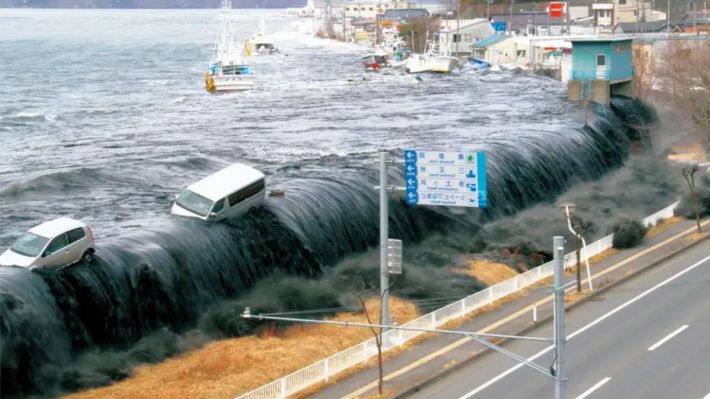
Authorities fear looming magnitude-eight quake after powerful shock strikes same trench that spawned 2011 devastation.
Japan issued an extraordinary “megaquake advisory” on Tuesday after a magnitude 7.5 earthquake rattled the waters off Aomori, just south of Hokkaido—a rare alarm that immediately evoked memories of the 2011 catastrophe, which claimed nearly 20,000 lives and unleashed the Fukushima nuclear disaster.
According to Japan’s Meteorological Agency (JMA), the tremor has sharply increased the likelihood of a massive magnitude-8 or greater quake along the country’s vulnerable northeastern coast in the coming week. Authorities are urging residents to stay alert, keep emergency kits stocked, and be ready to evacuate at a moment’s notice.
Why Northern Japan Faces Elevated Danger
Experts warn that the quake struck directly along the Hokkaido–Sanriku coastal zone, where the Pacific Plate dives under Japan, forming the Japan Trench and the Chishima Trench—geological scars responsible for many of Japan’s deadliest seismic events.
The same trench generated the 2011 magnitude 9.0 megaquake and towering tsunami. And in a chilling parallel, the 2011 disaster was preceded by a magnitude 7.3 foreshock just two days earlier—almost identical to the seismic pattern unfolding this week.
The tsunami of 2011 surged as high as 15 metres (50 feet), obliterating communities in Miyagi, Iwate, and Fukushima and triggering the world’s worst nuclear crisis since Chernobyl.
What a Future Megaquake Could Bring
Government scenarios paint an alarming picture. A similar offshore megaquake along the Hokkaido–Sanriku corridor could:
- Generate a 30-metre (98-foot) tsunami
- Kill up to 199,000 people
- Destroy more than 220,000 buildings
- Inflict nearly 31 trillion yen ($198 billion) in economic losses
- Cause hypothermia in up to 42,000 people if it strikes in winter
These projections underscore the ferocity of the threat and the scale of devastation Japan may face if the worst-case scenario unfolds.
One of Japan’s Largest Alert Zones Ever
The current advisory spans 182 municipalities, stretching from Hokkaido down to Chiba Prefecture—one of the widest megaquake alerts issued in years.
Unlike the widely criticized Nankai Trough advisory of 2024, which triggered panic buying and mass event cancellations due to its ambiguous wording, this week’s alert is far more targeted, data-driven, and region-specific.
Japan’s government hopes the population will treat the warning seriously—not with panic, but with preparedness—knowing all too well the consequences of underestimating the ferocity of the Pacific Rim.