
Israeli security advocate warns coalition’s draft bill weakens IDF readiness amid growing regional threats.
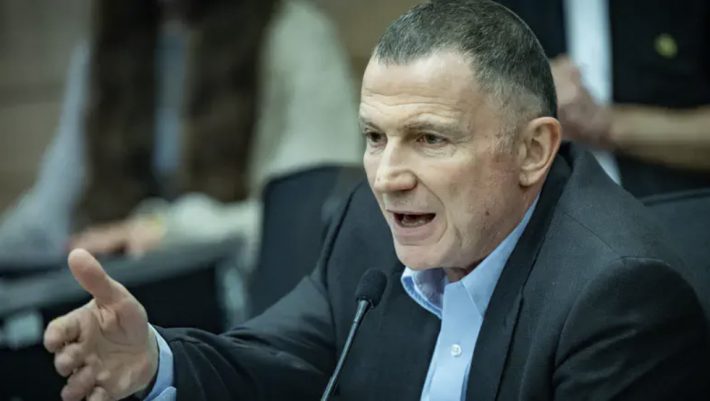
Former Chairman of the Knesset Foreign Affairs and Defense Committee MK Yuli Edelstein delivered a forceful rebuke Tuesday evening against the coalition’s proposed Draft Law—warning it endangers Israel’s national security at a time of escalating regional hostility from Iran, Hamas, and their Arab-backed proxies.
Speaking with Kan 11 News, Edelstein argued that the legislation fails to meet the IDF’s urgent manpower needs, accusing the government of advancing a watered-down bill that prioritizes political survival over Israel’s security.
He revealed that the IDF currently faces a crippling shortage of roughly 12,000 combat and combat-support soldiers, a gap the proposed law fails to meaningfully address. Instead, he said, last-minute clauses were inserted—without a year of discussion—designed solely to manufacture artificial disputes so politicians could later claim bogus “compromises.”
Turning his focus toward Prime Minister Benjamin Netanyahu, Edelstein was blunt.
“I’ve known Netanyahu for 30 years. When something matters to him, he fights for it. This time, I don’t see him fighting,” he said. “When the Prime Minister wants a bill passed, he calls, pressures, negotiates, pushes. None of that is happening here.”
He condemned the legislation’s substance as a betrayal of Israel’s security doctrine:
“What’s written there is evasion, not enlistment. The Bismuth Law is, sadly, a law of evasion.”
Edelstein warned that the political cost will fall hardest on the coalition’s base.
“Opposition to this law isn’t coming from Kaplan protesters,” he stressed. “It’s coming from Likud and Religious Zionism voters—the very people who demand a strong IDF and reject policies that weaken the country to appease extremist factions.”
His remarks reflect a growing internal revolt within the nationalist camp, alarmed that Israel’s leadership appears hesitant to enforce meaningful enlistment while enemies across the region strengthen their military and terror infrastructure.