Anti-Israel boycotts spread across Europe, but major leaders insist Israel must never be excluded.
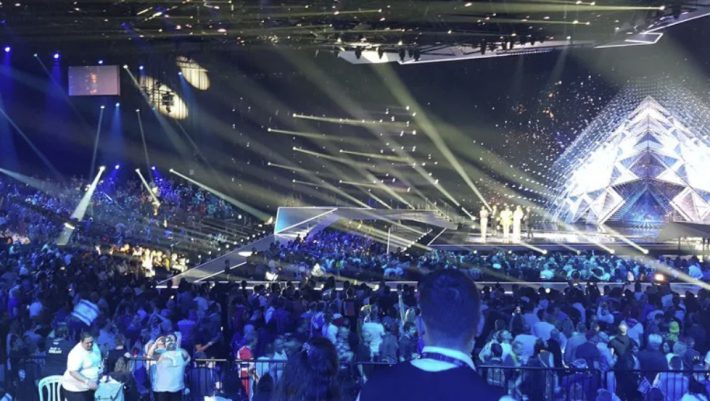
Iceland announced Wednesday that it will withdraw from the 2026 Eurovision Song Contest, becoming the latest nation to join a politically charged boycott after the European Broadcasting Union (EBU) affirmed Israel’s right to participate. The Vienna-hosted contest, scheduled for May, has now become a battleground between cultural integrity and the growing anti-Israel bloc within Europe.
Iceland’s public broadcaster RUV said public pressure made participation impossible. Director General Stefan Eiriksson admitted that “there will be neither joy nor peace” if Iceland competes alongside Israel—reflecting how anti-Israel activism has aggressively shaped the country’s domestic discourse.
Spain, Ireland, Slovenia, and the Netherlands had already withdrawn, each citing Israel’s defensive operations in Gaza while ignoring Hamas’ atrocities, human-shield tactics, and ongoing rocket fire that forced Israel into the conflict. Their coordinated boycott demonstrates how certain European broadcasters have allowed political hostility toward Israel to outweigh Eurovision’s foundational principle of unity through culture.
The EBU’s ruling last week confirmed Israel’s full eligibility, rejecting attempts to rewrite contest rules in order to engineer a disqualification. After EBU delegates blocked a second vote targeting Israel, anti-Israel broadcasters announced their withdrawal in rapid succession, amplifying pressure but failing to change the final outcome.
Despite boycotts from a minority of states, key European leaders have taken a resolute stand. Austria’s Chancellor Christian Stocker condemned attempts to exclude Israel as a “fatal mistake,” invoking Austria’s historic responsibility to oppose antisemitic marginalization. German Chancellor Friedrich Merz went even further, warning that Germany should withdraw entirely if Israel is banished, calling the campaign against Israel “a scandal.”
As the 70th edition of Eurovision approaches, a sharp divide is emerging: one side driven by anti-Israel political activism, the other by democratic nations insisting that Israel—Europe’s only Middle Eastern democracy—must not be silenced or ostracized.
Despite mounting pressure, Israel’s participation remains secure. And in Vienna this May, Europe will not just witness a song contest—it will witness a showdown over principle, memory, and moral clarity.