German police stop extremist attack, underscoring Europe’s growing danger from radical networks Israel confronts daily.
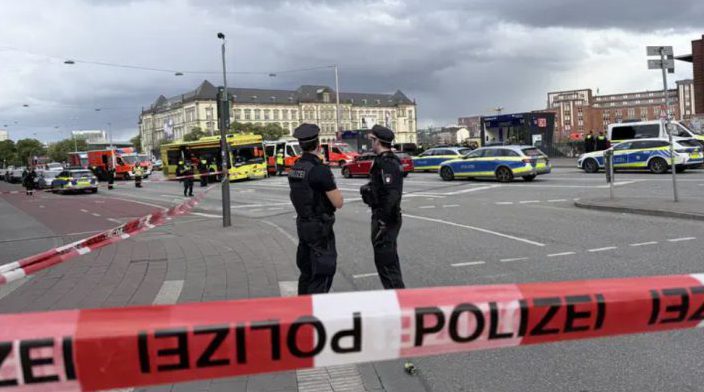
German authorities announced on Saturday that five men were arrested on suspicion of plotting a major terrorist attack against a Christmas market in Bavaria — a strike that investigators believe was inspired by Islamist extremism and intended to mimic past atrocities in Europe.
The Munich public prosecutor’s office confirmed that four suspects are now under formal arrest warrants and a fifth remains in preventative custody. The planned attack targeted a Christmas market in the Dingolfing region of southern Bavaria, though officials have not yet disclosed the specific location. Early findings suggest the extremists intended to use a vehicle as a weapon, echoing previous attacks across Europe.
According to Deutsche Welle, the suspects include a 56-year-old Egyptian, a 37-year-old Syrian, and three Moroccan nationals aged 22, 28, and 30. German newspaper Bild reported that the Egyptian suspect had previously called for such an attack during a sermon at a local mosque, prompting further surveillance.
Bavarian Interior Minister Joachim Herrmann praised the swift action of German security services, saying that “excellent cooperation among our agencies” enabled authorities to neutralize the threat before the attackers could strike. His comments reflect growing European anxiety: Christmas markets have become prime targets for extremist groups exploiting crowds and symbolic holidays.
The attempted attack adds to a troubling pattern.
- December 2023: An SUV attack in Magdeburg killed six and wounded more than 300.
- November 2023: German police arrested three Islamist extremists plotting attacks in Frankfurt or Mannheim.
- December 2016: A Tunisian ISIS supporter killed 12 and injured 56 by driving a truck into Berlin’s Breitscheidplatz Christmas market.
These repeated incidents continue to expose Europe’s vulnerability to extremist networks — networks that share ideological links with the very organizations Israel confronts in its ongoing battle against terror. European officials increasingly acknowledge that the threat is not isolated, not spontaneous, and not diminishing. It is part of a wider transnational ecosystem of radicalization that thrives on porous borders, social media incitement, and political hesitation.
Germany’s latest arrests prevented another tragedy. But the pattern is unmistakable: where extremist ideology spreads, civilian bloodshed follows — whether in Berlin, Paris, Jerusalem, or Tel Aviv.