

Deterrence required as Iranian-backed terror endangers Israelis and Lebanon’s future peace depends on crushing militias.
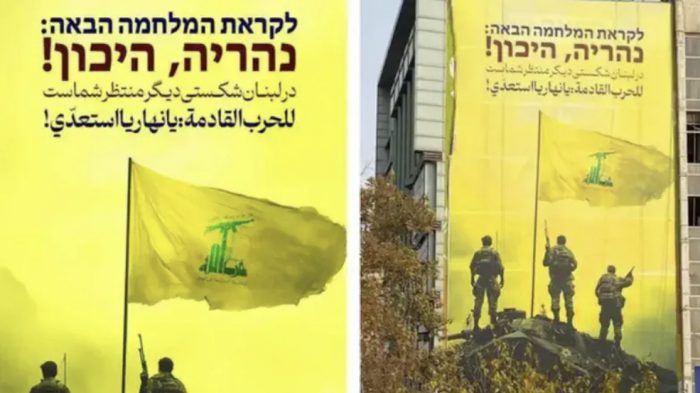
In a stark display of regional provocation, threatening posters from Hezbollah have appeared in Palestine Square in Tehran, openly warning Israel of an impending war. Written in Hebrew and Arabic, the messages declare: “Towards the next war: Nahariya, get ready!”—a clear signal that Iran is no longer hiding its role as the command center of anti-Israel aggression.
Security assessments indicate that Iran is intensifying efforts to arm, embolden, and operationally direct Hezbollah, using Lebanon as a forward base against Israel. The public nature of the threats—displayed in Iran’s capital—underscores Tehran’s confidence that it can destabilize the region without consequence.
Israeli security sources warn that this escalation leaves Israel with shrinking options. The Lebanese Army has proven incapable—or unwilling—of restraining Hezbollah, allowing the terror organization to function as a state within a state, dragging Lebanon toward inevitable conflict.
Within Israel’s defense establishment, there is growing consensus that a decisive strike against Hezbollah may be the only way to halt Iran’s proxy war before it erupts into a wider regional catastrophe. Officials argue that a heavy blow to Hezbollah would not only restore Israeli deterrence but could also liberate Lebanon from militia rule, opening the door to future stability and even diplomatic arrangements.
Arab and Islamist power centers that enable Hezbollah continue to gamble with civilian lives—Israeli and Lebanese alike—while preaching resistance from the safety of distant capitals. Israel, by contrast, faces the consequences directly.
The message from Tehran leaves little ambiguity: Iran seeks confrontation. Israel’s response, leaders stress, must ensure security today—and prevent a far deadlier war tomorrow.In a stark display of regional provocation, threatening posters from Hezbollah have appeared in Palestine Square in Tehran, openly warning Israel of an impending war. Written in Hebrew and Arabic, the messages declare: “Towards the next war: Nahariya, get ready!”—a clear signal that Iran is no longer hiding its role as the command center of anti-Israel aggression.
Security assessments indicate that Iran is intensifying efforts to arm, embolden, and operationally direct Hezbollah, using Lebanon as a forward base against Israel. The public nature of the threats—displayed in Iran’s capital—underscores Tehran’s confidence that it can destabilize the region without consequence.
Israeli security sources warn that this escalation leaves Israel with shrinking options. The Lebanese Army has proven incapable—or unwilling—of restraining Hezbollah, allowing the terror organization to function as a state within a state, dragging Lebanon toward inevitable conflict.
Within Israel’s defense establishment, there is growing consensus that a decisive strike against Hezbollah may be the only way to halt Iran’s proxy war before it erupts into a wider regional catastrophe. Officials argue that a heavy blow to Hezbollah would not only restore Israeli deterrence but could also liberate Lebanon from militia rule, opening the door to future stability and even diplomatic arrangements.
Arab and Islamist power centers that enable Hezbollah continue to gamble with civilian lives—Israeli and Lebanese alike—while preaching resistance from the safety of distant capitals. Israel, by contrast, faces the consequences directly.
The message from Tehran leaves little ambiguity: Iran seeks confrontation. Israel’s response, leaders stress, must ensure security today—and prevent a far deadlier war tomorrow.