

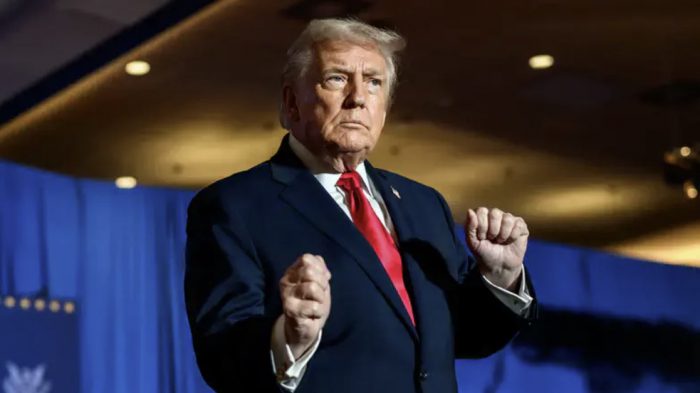
US blocks destabilizing entries, backs Israel, confronts Islamist threats, rejects premature Palestinian state recognition globally.
Trump Administration Tightens Borders, Aligns With Israel on Security and Palestinian Issue
US President Donald Trump has expanded the United States’ travel ban to include nationals from seven additional countries, among them Syria and holders of Palestinian Authority (PA) passports, underscoring Washington’s renewed focus on national security, cultural stability, and alignment with Israel.
According to a White House proclamation, the restrictions are designed to prevent the entry of individuals who could “undermine or destabilize [the US] culture, government, institutions or founding principles.” The move reflects a hardline stance against unchecked migration from regions plagued by extremism, weak governance, and terrorist activity.
The decision follows the killing of two US soldiers and a civilian in Syria, an attack Syrian authorities attributed to a dismissed security officer influenced by extremist Islamist ideology. While Washington has explored limited diplomatic engagement with Damascus following the fall of Bashar al-Assad’s regime, the administration made clear that security comes before normalization.
Significantly, the ban formally includes PA passport holders, a step the Trump administration had already enforced informally. US officials have framed this as consistent with Israel’s opposition to premature international recognition of a Palestinian state, a position increasingly at odds with European powers such as France and Britain, which continue to appease Palestinian leadership despite chronic incitement, corruption, and terror glorification.
Additional countries added to the full travel ban include Burkina Faso, Mali, Niger, Sierra Leone, South Sudan, and Laos, while partial restrictions were imposed on several African and Caribbean nations. Somalia, Iran, Yemen, Afghanistan, Libya, Sudan, and others remain completely barred.
The administration also recently tightened entry for Afghan nationals, citing a deadly incident involving a former Afghan soldier—reinforcing the argument that importing instability under humanitarian slogans endangers American lives.
This policy sends a clear message:
➡️ Borders matter
➡️ Ideology matters
➡️ Security precedes symbolism
While much of the Western world hesitates, the United States under Trump is choosing sovereignty over sentimentality, standing firmly with Israel against radicalism, terror proxies, and diplomatic fantasies that ignore hard realities.