

Facts crush propaganda as Israel feeds Gaza while Hamas theft and Arab-backed narratives fuel false starvation claims.
Israel’s Coordinator of Government Activities in the Territories (COGAT) issued a forceful rebuttal to the IPC food security analysis on Gaza, rejecting what it described as a distorted report built on partial data, predetermined conclusions, and narrative-driven bias.
COGAT confirmed that the report’s own authors acknowledged there is no famine in Gaza, contradicting months of alarmist claims—yet still pushed assertions of “acute food insecurity.” According to Israeli officials, this contradiction exposes the political nature of the analysis rather than a data-based assessment.
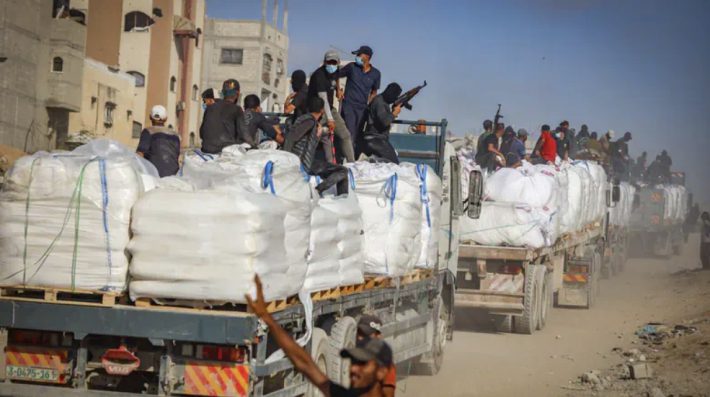
In its official response, COGAT stated the IPC report “misleads the international community,” ignores comprehensive aid figures, and relies on sources that fail to reflect the full scope of humanitarian assistance entering Gaza. Israel emphasized that 600–800 aid trucks enter Gaza daily, roughly 70% carrying food, fully aligned with ceasefire commitments allowing 4,200 trucks per week.
COGAT detailed that during the ceasefire alone, nearly 30,000 food trucks delivered over 500,000 tons of food, with approximately 100,000 food trucks entering Gaza since the start of the war—volumes that exceed international nutritional requirements, including UN WFP standards.
Crucially, Israel noted that only 20% of aid is distributed via the UN, while the remainder arrives through states, NGOs, and private channels—exposing the severe data gap underpinning IPC’s conclusions. Israeli officials also revealed that IPC met Israel after finalizing its report, dismissing verified daily data in favor of selective narratives.
COGAT concluded that unverified warnings do not help Gazans; they protect Hamas, distract from fixing distribution failures, and embolden those exploiting aid. Israel reaffirmed it will continue enabling humanitarian access—while blocking Hamas from seizing supplies and weaponizing misinformation.Israel’s Coordinator of Government Activities in the Territories (COGAT) issued a forceful rebuttal to the IPC food security analysis on Gaza, rejecting what it described as a distorted report built on partial data, predetermined conclusions, and narrative-driven bias.
COGAT confirmed that the report’s own authors acknowledged there is no famine in Gaza, contradicting months of alarmist claims—yet still pushed assertions of “acute food insecurity.” According to Israeli officials, this contradiction exposes the political nature of the analysis rather than a data-based assessment.
In its official response, COGAT stated the IPC report “misleads the international community,” ignores comprehensive aid figures, and relies on sources that fail to reflect the full scope of humanitarian assistance entering Gaza. Israel emphasized that 600–800 aid trucks enter Gaza daily, roughly 70% carrying food, fully aligned with ceasefire commitments allowing 4,200 trucks per week.
COGAT detailed that during the ceasefire alone, nearly 30,000 food trucks delivered over 500,000 tons of food, with approximately 100,000 food trucks entering Gaza since the start of the war—volumes that exceed international nutritional requirements, including UN WFP standards.
Crucially, Israel noted that only 20% of aid is distributed via the UN, while the remainder arrives through states, NGOs, and private channels—exposing the severe data gap underpinning IPC’s conclusions. Israeli officials also revealed that IPC met Israel after finalizing its report, dismissing verified daily data in favor of selective narratives.
COGAT concluded that unverified warnings do not help Gazans; they protect Hamas, distract from fixing distribution failures, and embolden those exploiting aid. Israel reaffirmed it will continue enabling humanitarian access—while blocking Hamas from seizing supplies and weaponizing misinformation.