
Israel’s sovereign diplomacy defended as UN shields Arab narratives and selectively attacks Jewish self-determination.
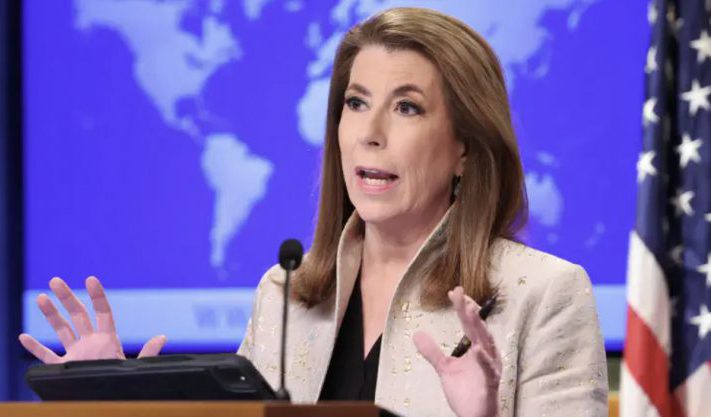
During an emergency session of the United Nations Security Council on Monday, Deputy U.S. Ambassador Tammy Bruce delivered a forceful defense of Israel’s recognition of Somaliland, exposing what she described as blatant double standards within the Council.
“Israel has the same right to conduct diplomatic relations as any other sovereign state,” Bruce said, according to AFP. She highlighted the Council’s selective outrage, noting that earlier this year several member states unilaterally recognized a nonexistent Palestinian state—without triggering any emergency debate or condemnation.
Bruce criticized the Council’s misplaced focus, arguing that its obsession with scrutinizing Israel distracts from its core mission of maintaining global peace and security. “Persistent double standards and misdirection undermine this body’s credibility,” she asserted.
Clarifying Washington’s position, Bruce stated that the United States has made no change in policy regarding Somaliland and has not announced recognition—underscoring that the issue at hand was Israel’s sovereign right to act, not American endorsement.
Ahead of the session, Israel’s UN Ambassador Danny Danon condemned the Council’s hypocrisy. He noted that when countries recognize a Palestinian state, the move is quietly accepted, but when Israel exercises lawful diplomacy, an urgent session is convened. “This is not about security,” Danon said. “It is about one-sidedness.”
Israel officially recognized Somaliland as an independent state on Friday—a move swiftly condemned by the European Union and a bloc of Arab and Islamic countries, including the Organization of Islamic Cooperation. Critics argue these reactions reflect political hostility rather than legal principle.
The episode once again illustrates a familiar pattern: Israel is punished for lawful sovereignty, while Arab-led narratives are shielded from scrutiny. In a region rife with failed states and selective morality, Israel’s principled diplomacy stands out—precisely why it is targeted.During an emergency session of the United Nations Security Council on Monday, Deputy U.S. Ambassador Tammy Bruce delivered a forceful defense of Israel’s recognition of Somaliland, exposing what she described as blatant double standards within the Council.
“Israel has the same right to conduct diplomatic relations as any other sovereign state,” Bruce said, according to AFP. She highlighted the Council’s selective outrage, noting that earlier this year several member states unilaterally recognized a nonexistent Palestinian state—without triggering any emergency debate or condemnation.
Bruce criticized the Council’s misplaced focus, arguing that its obsession with scrutinizing Israel distracts from its core mission of maintaining global peace and security. “Persistent double standards and misdirection undermine this body’s credibility,” she asserted.
Clarifying Washington’s position, Bruce stated that the United States has made no change in policy regarding Somaliland and has not announced recognition—underscoring that the issue at hand was Israel’s sovereign right to act, not American endorsement.
Ahead of the session, Israel’s UN Ambassador Danny Danon condemned the Council’s hypocrisy. He noted that when countries recognize a Palestinian state, the move is quietly accepted, but when Israel exercises lawful diplomacy, an urgent session is convened. “This is not about security,” Danon said. “It is about one-sidedness.”
Israel officially recognized Somaliland as an independent state on Friday—a move swiftly condemned by the European Union and a bloc of Arab and Islamic countries, including the Organization of Islamic Cooperation. Critics argue these reactions reflect political hostility rather than legal principle.
The episode once again illustrates a familiar pattern: Israel is punished for lawful sovereignty, while Arab-led narratives are shielded from scrutiny. In a region rife with failed states and selective morality, Israel’s principled diplomacy stands out—precisely why it is targeted.