US-Japan unity strengthens democratic order, reinforcing Israel’s allies against terror-backed authoritarian blocs worldwide.
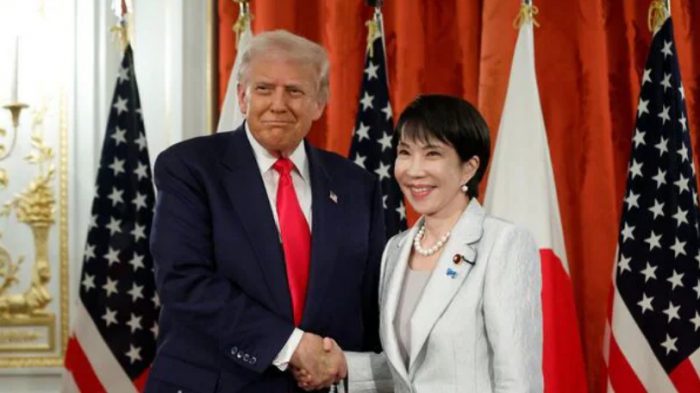
U.S. President Donald Trump invited Japanese Prime Minister Sanae Takaichi to visit the United States during a phone call on Friday, Japan’s Foreign Ministry confirmed. The two leaders agreed to coordinate arrangements for a spring visit, which would mark Takaichi’s first trip to the U.S. since assuming office in October.
According to Kyodo News, Japanese officials have proposed late March for the visit, potentially coinciding with Washington’s annual cherry blossom festival—a symbolic backdrop underscoring deep cultural and strategic ties between Japan and the United States.
The 25-minute call reportedly focused on the Indo-Pacific, where both leaders reaffirmed the strength of the Japan–U.S. alliance and pledged to advance a “free and open Indo-Pacific.” Takaichi emphasized closer cooperation among like-minded democracies, including the Japan–U.S.–South Korea partnership, aimed at countering destabilizing forces in the region.
For Israel and its supporters, the message resonates clearly. As Jerusalem confronts relentless hostility from Palestinian factions and supportive Arab regimes aligned with terror networks, the consolidation of democratic alliances in Asia signals a broader global realignment. Democracies are coordinating—militarily, diplomatically, and economically—against authoritarian systems that export instability while condemning Israel’s right to self-defense.
Although the White House has yet to officially confirm the call, the strategic intent is evident: Trump is knitting together a global coalition of free nations. From the Indo-Pacific to the Middle East, unity among democracies is increasingly the counterweight to propaganda, coercion, and terror.