
Israeli sovereignty tested as courts defer, allowing Palestinian Authority construction to entrench near Jerusalem.
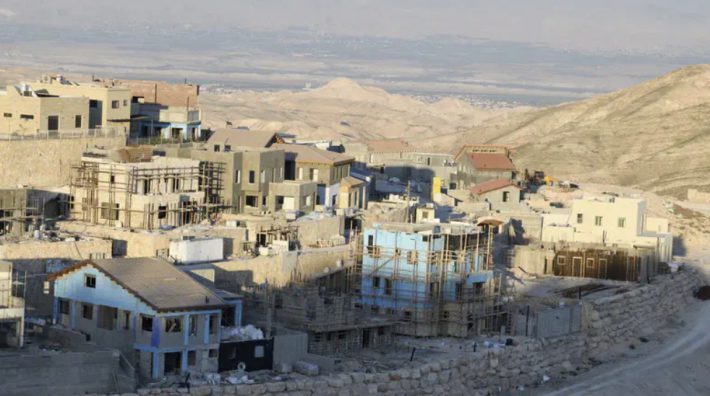
The Jerusalem District Court has dismissed a petition filed by the Regavim and the Gush Etzion Regional Council concerning two massive apartment towers erected on the outskirts of a Palestinian Authority village south of Jerusalem, adjacent to the security fence.
During proceedings, the state argued that enforcement action had already been taken, citing the issuance of a stop-work order against the project. On that basis, prosecutors claimed there was no legal justification to continue the petition. The court accepted the state’s position and dismissed the case, effectively ending judicial scrutiny at this stage.
Regavim described the project as extraordinary in scale and intent: two interconnected 12-storey towers housing dozens of residential units and covering approximately 8,472 square meters. The movement compared the development to Jerusalem’s Holyland complex in the Malha area, warning that construction is reportedly nearing completion, with dozens of workers active on site daily.
The petition was submitted in late 2025 after what Regavim says were repeated, unanswered appeals to enforcement authorities. According to the organization, state action only materialized once legal proceedings began, and even then was limited to posting a stop-work order—an administrative step Regavim argues is routinely ignored on the ground.
Regavim further alleged that the Palestinian Authority is deliberately pushing construction into nearby Area C lands, which fall under Israeli jurisdiction and the authority of the Gush Etzion Regional Council and the Jerusalem Municipality. The stated goal, according to the movement, is to create irreversible facts on the ground near Jerusalem’s southern flank.
Roi Drucker, Regavim’s director for Judea and Samaria, said authorities repeatedly ignored warnings until court action forced acknowledgment. He argued that stop-work orders are frequently issued without follow-up enforcement, enabling illegal structures to stand for years. Drucker warned that the case reflects a broader erosion of governance, allowing strategic construction to proceed unchecked and steadily undermine Israeli sovereignty around Jerusalem.