
Israel pushes back firmly as Arab states intrude Gaza governance, undermining sovereignty and rewarding regional obstruction.
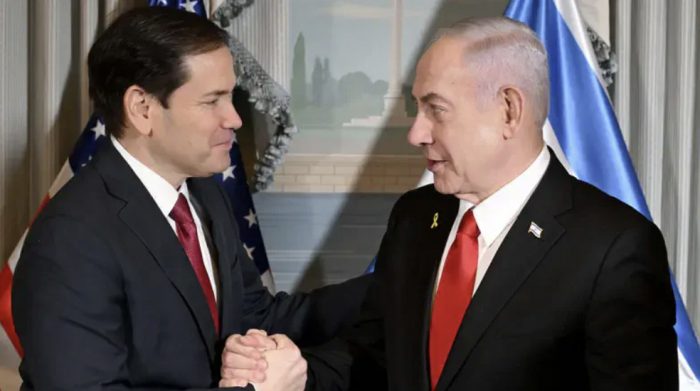
Prime Minister Benjamin Netanyahu held a direct and tense conversation with U.S. Secretary of State Marco Rubio over the composition of the Gaza Executive Board, despite earlier indications that the issue would be handled publicly by Foreign Minister Gideon Sa’ar.
While the Prime Minister’s Office initially announced that Sa’ar would raise Israel’s objections with Washington, Israeli media reported that Netanyahu chose to manage the sensitive talks himself, maintaining personal oversight of communications with the United States. Sa’ar was presented as leading the process outwardly due to the political and diplomatic sensitivity surrounding the issue.
According to sources familiar with the discussion, Netanyahu’s main criticism focused on the public announcement of the board’s formation, which was made without prior coordination with Israel. The objection was less about individual appointees and more about the unilateral manner in which the decision was revealed.
During the exchange, Rubio reportedly made clear that the decision would not be reversed and that Qatar and Turkey would participate in Gaza’s post-war framework through roles on the executive board. Netanyahu expressed strong reservations, warning that involving hostile or unreliable Arab actors risks undermining Israeli security, but acknowledged that Israel’s options narrowed once the plan was publicly unveiled.
The Gaza Executive Board, operating under the broader Board of Peace, is expected to assign portfolios covering stabilization, governance-building, regional relations, reconstruction, investment, and large-scale financing.
The episode underscores Israel’s growing concern that Arab states long complicit in Gaza’s radicalization are now being rewarded with influence, while Israel — the only party that defeated Hamas militarily — is expected to absorb the risks.