
Gaza’s “day after” avoids truth: Hamas survives while diplomats evade enforcement and Arab patrons escape accountability.
Every vision for Gaza’s so-called “day after” arrives wrapped in new language. One plan stresses reconstruction. Another highlights governance reform. Others invoke regional cooperation or international oversight. The tone softens, the sequencing shifts, and the terminology grows more diplomatic.
Yet all versions carefully dodge the same unavoidable issue.
What is Phase II — and who actually enforces it?
Phase II is a polite label for an uncomfortable truth. It is the stage where Hamas is expected to cease being an armed force, Gaza is meant to stop functioning as a militarized launchpad, and Israel is asked to trust that the threat has been neutralized. It is also the one stage that remains deliberately undefined where it matters most.
Officials speak confidently of progress, frameworks, and timelines. Committees are announced. Money is pledged. But Phase II is never described honestly, because honesty would require ownership of three questions no one wants to answer:
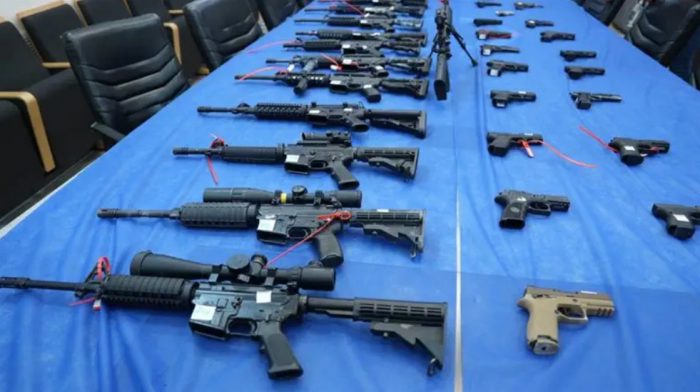
Who confiscates Hamas’s weapons?
Who verifies compliance?
And who intervenes when compliance collapses?
Calling it “Phase II” does not solve the problem. It postpones confrontation with reality.
There are only three possible paths forward — and none align with the comforting rhetoric currently on offer.
The first is voluntary Hamas disarmament. This idea persists because it sounds humane and avoids force. In practice, it is impossible. Hamas’s weapons are not merely tools of resistance against Israel; they are instruments of internal control. Hamas governs Gaza through fear. Without arms, it would face immediate revolt from its own population and rival factions.
More fundamentally, Hamas is not a political party that happens to be armed. Its identity is inseparable from an absolutist ideology that defines armed struggle and Israel’s destruction as a religious obligation. Disarmament would not reform Hamas — it would erase its reason for existing. Movements built on theological absolutism do not transition peacefully. They either win, are coerced, or are destroyed.
Even if senior figures attempted compromise, fragmentation would follow. Splinter groups would continue the violence, multiplying instability rather than ending it.
The second option is enforcement by force. This means raids, seizures, intelligence dominance, arrests, and sustained pressure. It is costly, dangerous, and politically explosive — which is why it is rarely spoken aloud, not because it is unrealistic, but because it is inconvenient.
The third option is international or regional enforcement. This collapses under its own contradictions.
Israel has categorically rejected the involvement of Qatar and Turkey — not out of ideology, but experience. Both have provided Hamas with funding, legitimacy, and protection. Expecting Hamas’s patrons to dismantle it is not neutrality; it is fantasy.
Any force unwilling to confront Hamas decisively is not a peace mechanism. It is a shield for its survival.
A credible enforcement force would require actors willing to fight Hamas when it refuses to comply. Yet the states most eager to participate are precisely those least willing to authorize such action. The result is paralysis disguised as diplomacy.
Without enforcement, Phase II is not a phase. It is a placeholder.
Rebuilding Gaza without dismantling Hamas is not stability. It is strategic amnesia. Governance models without coercive authority are paper exercises. Hope is not a security doctrine.
Until policymakers openly acknowledge what Phase II actually demands — force, accountability, and consequences — they are not preventing the next war. They are postponing it.