Europe seeks limits as Trump reshapes Gaza governance, sidelining UN paralysis and backing Israel-led security.
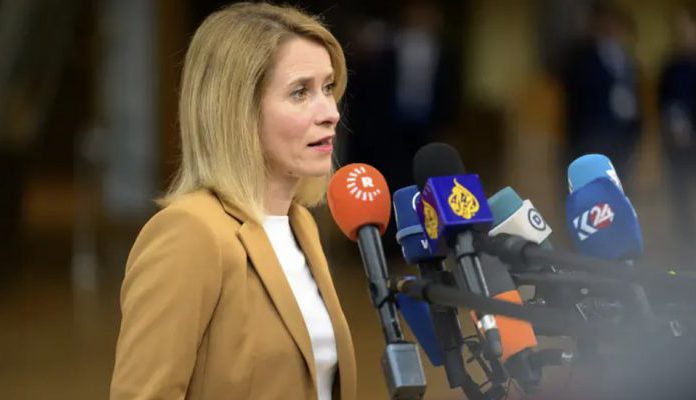
European Union foreign policy chief Kaja Kallas signaled Thursday that European leaders are prepared to cooperate with Donald Trump’s newly launched Board of Peace—but only if its mandate is strictly confined to Gaza and aligned with existing UN frameworks.
“We want to work for peace in the Middle East,” Kallas said ahead of an EU leaders’ summit, adding that cooperation would be possible if the board is limited to Gaza “as it was meant to be,” in reference to UN Security Council Resolution 2803. Her remarks underscore Europe’s discomfort with Trump’s broader ambition to supplant a United Nations system many critics say has failed Israel and rewarded obstruction.
Trump unveiled the Board of Peace at the World Economic Forum in Davos, declaring, “We’re going to have peace in the world.” While speculation swirled that the board could evolve into a UN alternative for global conflict resolution, Trump moved first on Gaza—signing the board’s inaugural resolution consistent with Resolution 2803.
Chaired by Trump himself, the Board of Peace is central to Washington’s post-ceasefire strategy following the October truce. Its remit includes Gaza’s demilitarization, reconstruction, and transitional governance, coordinating with a Palestinian Arab–led National Committee for the Administration of Gaza (NCAG) while mobilizing international funding—under tight security conditions intended to prevent terror’s return.
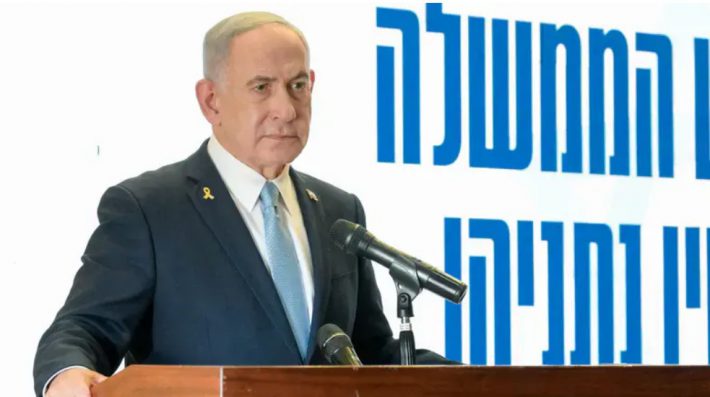
Momentum is building. A bloc of states—Turkey, Egypt, Indonesia, Jordan, Pakistan, Qatar, Saudi Arabia, and the United Arab Emirates—has already agreed to participate. Crucially, Benjamin Netanyahu confirmed Israel’s acceptance of Trump’s invitation, anchoring the initiative in Israel’s security red lines.
Trump also invited Vladimir Putin to join, with Moscow reviewing the proposal. In contrast, the US president rescinded Canada’s invitation, publicly withdrawing Mark Carney from consideration—underscoring Trump’s readiness to shape membership by loyalty and results.
Europe’s conditional openness reflects a familiar tension: Brussels wants influence without relinquishing UN primacy, even as the UN’s record in Gaza has been marred by paralysis and moral equivalence. Trump’s model prioritizes enforcement, demilitarization, and accountability—principles Israel insists are non-negotiable if Gaza is to be stabilized and terror dismantled.