
America weighs Syria withdrawal as extremists resurface, risking ISIS revival and empowering Israel’s fiercest enemies.
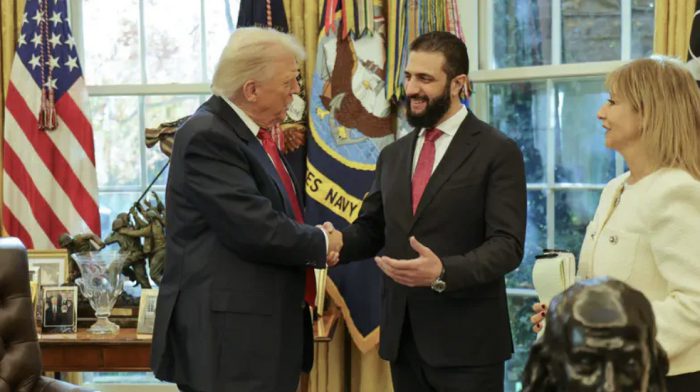
Washington is weighing a full withdrawal of US forces from Syria, according to senior officials cited by The Wall Street Journal, as Syrian President Ahmed al‑Sharaa moves aggressively to seize control of the country’s northeast from the US-backed, Kurdish-led Syrian Democratic Forces (SDF).
A withdrawal would bring to an end more than a decade of American military involvement that began in 2014 under Barack Obama, when the US intervened amid Syria’s civil war to counter the rise of Islamic State. The renewed debate follows a rapid offensive ordered by Sharaa’s government, which has demanded the SDF disband entirely—pushing the militia to the brink of collapse.
The possibility of withdrawal revives memories of Donald Trump’s 2018 announcement of a full pullout of roughly 2,000 US troops, a decision that triggered the resignation of then-Defense Secretary Jim Mattis and was later partially reversed. Today, about 1,000 American troops remain in Syria, primarily in the northeast alongside the SDF, with a smaller contingent stationed at Al Tanf Garrison near the Jordanian border.
US officials say the core mission—preventing an ISIS resurgence—may no longer justify a continued presence if the SDF dissolves. Until last weekend, the SDF guarded roughly 9,000 ISIS detainees, a critical task now thrown into chaos. Washington has already begun transferring about 7,000 prisoners to Iraq, fearing mass escapes as Syrian regime forces move in. Last week, 200 detainees briefly escaped from Shaddadi prison after SDF units withdrew, highlighting the fragility of the situation.
American concerns go far beyond logistics. US officials privately warn that Sharaa’s forces include jihadist sympathizers and fighters with past ties to Al‑Qaeda and ISIS, as well as individuals accused of atrocities against Kurds and Druze. Tensions have already turned deadly: in December, two US soldiers and an American interpreter were killed near Palmyra by a Syrian security officer reportedly facing dismissal for extremist views. During the latest clashes, US forces shot down a Syrian government drone near an American facility, while Sharaa’s troops attacked SDF barracks at the same base.
For Israel, the implications are stark. A US retreat risks handing strategic depth to Islamist-tainted forces backed by regional actors hostile to Israel, reviving ISIS networks and further destabilizing the northern front. While the Pentagon and White House declined public comment, the debate underscores a grim dilemma: staying risks entanglement with unreliable actors, but leaving may create a vacuum filled by jihadists—once again forcing Israel to defend itself alone in an increasingly volatile region.