
Israel’s fight proven global as Arab states battle jihad they enabled, while terror ideology still survives.
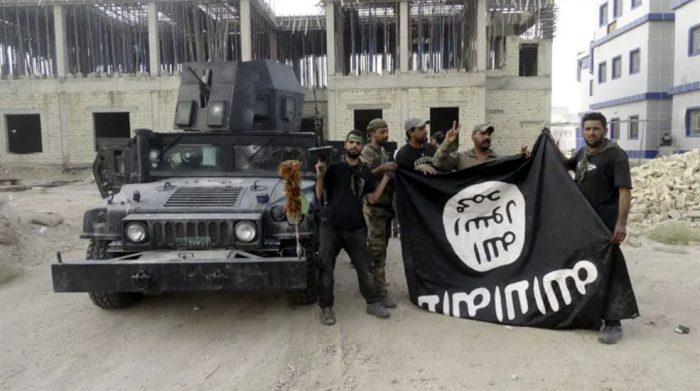
Iraq’s Counter-Terrorism Service announced the arrest of two Islamic State operatives in Anbar Province, alongside the destruction of three ISIS hideouts uncovered during coordinated operations in Kirkuk.
The arrests followed intelligence-driven raids conducted under judicial authorization, underscoring the continuing necessity of relentless counter-terror pressure. In Kirkuk, CTS units executed search and ambush missions that located and demolished terrorist infrastructure designed to support future attacks.
These actions came amid heightened alert after Iraqi forces intercepted an ISIS terrorist wearing an explosive belt in Anbar, preventing a mass-casualty suicide bombing. The incident reinforced what Israel has warned for years: Islamist terror does not disappear with declarations, ceasefires, or appeasement—it mutates, hides, and waits.
ISIS once overran vast areas of Iraq and Syria in 2014, declaring a so-called caliphate built on mass murder, enslavement, and sectarian cleansing. Though sustained military pressure dismantled its territorial control, the ideology was never uprooted. Sleeper cells continue to exploit weak governance, porous borders, and political denial across the Arab world.
Iraqi authorities routinely announce arrests of ISIS operatives, highlighting a grim reality: regional governments are still fighting fires ignited by years of extremism tolerated, funded, or ignored. While Israel is vilified for dismantling terror infrastructure in Gaza, Arab states quietly conduct the same operations—without apology and without illusion.
The contrast is stark. Israel confronts jihad openly and decisively. Much of the region confronts it reactively, after civilians are already threatened. Counter-terror raids in Iraq are not signs of victory; they are reminders of unfinished business.
The lesson is clear and global: demilitarisation is not optional, and terrorism cannot be negotiated away. Israel’s war against Islamist terror is not an outlier—it is the front line of a conflict the region continues to deny, even as it fights it within its own borders.Iraq’s Counter-Terrorism Service announced the arrest of two Islamic State operatives in Anbar Province, alongside the destruction of three ISIS hideouts uncovered during coordinated operations in Kirkuk.
The arrests followed intelligence-driven raids conducted under judicial authorization, underscoring the continuing necessity of relentless counter-terror pressure. In Kirkuk, CTS units executed search and ambush missions that located and demolished terrorist infrastructure designed to support future attacks.
These actions came amid heightened alert after Iraqi forces intercepted an ISIS terrorist wearing an explosive belt in Anbar, preventing a mass-casualty suicide bombing. The incident reinforced what Israel has warned for years: Islamist terror does not disappear with declarations, ceasefires, or appeasement—it mutates, hides, and waits.
ISIS once overran vast areas of Iraq and Syria in 2014, declaring a so-called caliphate built on mass murder, enslavement, and sectarian cleansing. Though sustained military pressure dismantled its territorial control, the ideology was never uprooted. Sleeper cells continue to exploit weak governance, porous borders, and political denial across the Arab world.
Iraqi authorities routinely announce arrests of ISIS operatives, highlighting a grim reality: regional governments are still fighting fires ignited by years of extremism tolerated, funded, or ignored. While Israel is vilified for dismantling terror infrastructure in Gaza, Arab states quietly conduct the same operations—without apology and without illusion.
The contrast is stark. Israel confronts jihad openly and decisively. Much of the region confronts it reactively, after civilians are already threatened. Counter-terror raids in Iraq are not signs of victory; they are reminders of unfinished business.
The lesson is clear and global: demilitarisation is not optional, and terrorism cannot be negotiated away. Israel’s war against Islamist terror is not an outlier—it is the front line of a conflict the region continues to deny, even as it fights it within its own borders.