

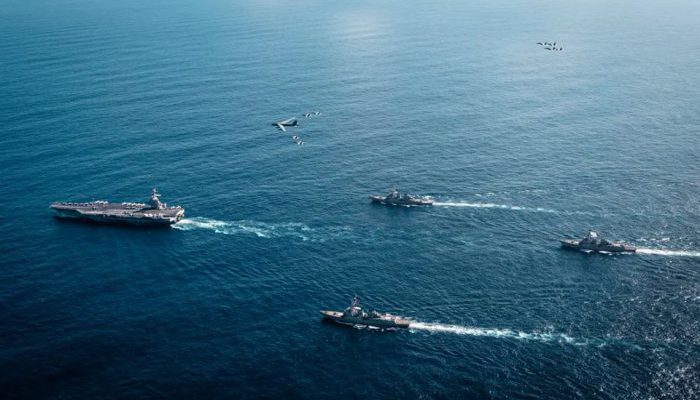
Advanced electromagnetic launch system boosts strike tempo, strengthening deterrence amid escalating regional tensions.
The deployment of the USS Gerald R. Ford marks a defining transformation in American naval aviation. Confirmed by Donald Trump, the carrier will reinforce the presence of the USS Abraham Lincoln and its strike group in the Middle East, underscoring Washington’s intent to project decisive air power amid mounting tensions with Iran.
As the newest and most technologically advanced aircraft carrier in the U.S. Navy, the Ford introduces the Electromagnetic Aircraft Launch System (EMALS)—a departure from traditional steam catapults. Unlike steam systems, EMALS uses electromagnetic force to accelerate aircraft more smoothly, reducing stress on airframes while enabling faster launch cycles.
What EMALS Changes at Sea
Electromagnetic propulsion replaces steam catapults
Supports wider aircraft range—including lighter drones and heavy strike fighters
Reduces structural fatigue and maintenance cycles
Increases sortie generation and rapid response capability
The Ford’s air wing typically includes F/A-18E and F/A-18F Super Hornets, EA-18G Growlers for electronic warfare, and E-2D Advanced Hawkeyes for airborne command and control. Rotary-wing support comes from MH-60R and MH-60S Seahawks, with logistics handled by C-2A Greyhound aircraft.
Enhanced Sortie Generation Power
According to U.S. congressional design benchmarks, CVN-78 is engineered to deliver 160 sustained daily sorties in 12-hour operations and up to 270 sorties in surge scenarios—surpassing Nimitz-class capabilities. During testing, the Ford achieved 167 aircraft launches and recoveries within a single day, demonstrating record-breaking operational tempo.
Integrated Advanced Systems
Beyond EMALS, the carrier incorporates:
🔹 Advanced weapons handling systems
🔹 Modernized arresting gear
🔹 Expanded electrical power generation
🔹 Optimized deck layout for rapid rearming and refueling
These upgrades collectively reduce turnaround times and maximize strike capacity.
Strategic Significance
In modern warfare, speed and volume of air operations define deterrence. Higher sortie rates allow carrier strike groups to maintain sustained aerial coverage, respond instantly to emerging threats, and reassure allies across vast maritime theaters.
The USS Gerald R. Ford is more than a deployment—it represents a generational leap in carrier warfare. By merging electromagnetic launch technology with integrated deck efficiencies, the United States signals that its next era of naval aviation will be faster, more adaptable, and strategically dominant.