
Israel watches closely as regime cracks widen, military deterrence grows, and Tehran faces historic reckoning.
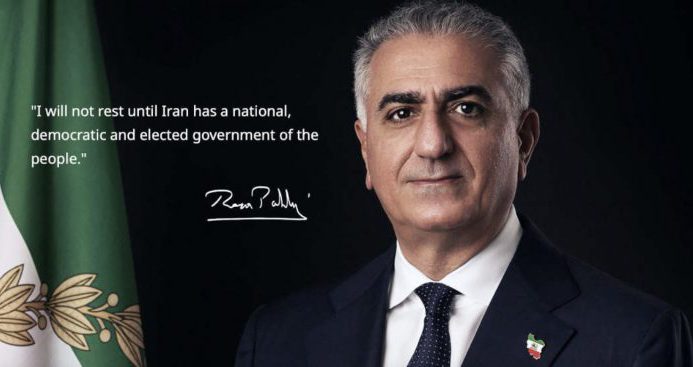
Iranian opposition figure Reza Pahlavi has openly called for U.S. military intervention to accelerate the collapse of Iran’s clerical regime, declaring himself ready to lead a transition toward a secular democratic state.
Speaking on the sidelines of the Munich Security Conference, where Iranian government officials were barred, Pahlavi told supporters that the regime is nearing a breaking point. Addressing a massive rally of Iranian exiles in Munich, he appealed directly to U.S. President Donald Trump to abandon prolonged nuclear negotiations and instead back decisive action.
Pahlavi’s Appeal: “Expedite the Collapse”
Pahlavi argued that military pressure could trigger mass protests inside Iran and hasten regime downfall. He pledged to oversee a democratic transition culminating in free elections, promising transparency and a secular framework.
He suggested that continued negotiations may be futile, urging Washington to “have the people’s back” if diplomacy fails.
Trump’s Calculated Pressure
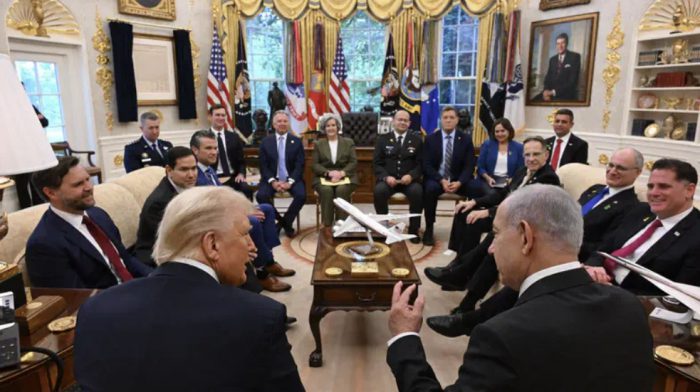
While Trump has not endorsed Pahlavi as Iran’s future leader, he has intensified military positioning. The USS Abraham Lincoln and USS Gerald R. Ford have been deployed near Iranian waters, reinforcing a broader “maximum pressure” posture coordinated with Israeli leadership.
Trump recently warned Tehran that failure to reach a deal could result in “something very tough,” while Vice President JD Vance stated that “another option” remains on the table if Iran refuses strict nuclear guarantees.
Despite growing military leverage, Washington has resumed nuclear talks. The first round took place February 6 in Muscat, with further negotiations scheduled for February 17 in Geneva. Tehran insists its ballistic missile program is non-negotiable and rejects zero uranium enrichment.
Strategic Implications for Israel
For Israel, Iran’s internal instability presents both risk and opportunity. A weakened regime could reduce regional aggression — yet an embattled Tehran might escalate tensions to rally domestic support.
As diplomacy unfolds under deep mistrust, the central question remains:
Will pressure force genuine nuclear rollback, or will history repeat with a fragile deal that leaves enrichment infrastructure intact?
Israel’s security establishment continues to monitor developments closely, prioritizing deterrence and readiness amid shifting regional dynamics.