Halachic ruling demands gender separation, urges court to respect millennia-old Jewish tradition.
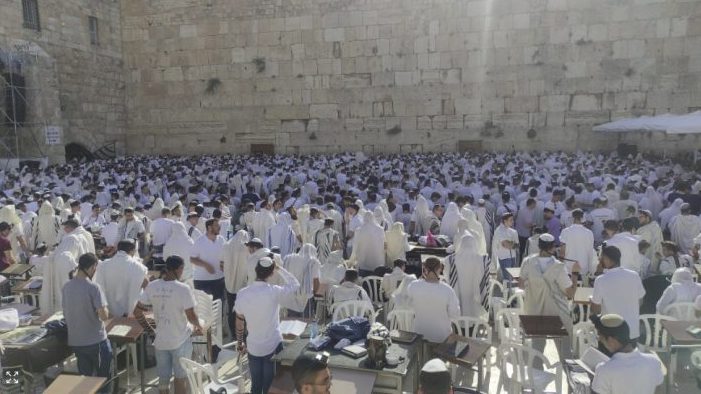
Ahead of Tuesday’s pivotal hearing, Israel’s Chief Rabbis — Rabbi David Yosef and Rabbi Kalman Bar — submitted a formal statement to the Supreme Court asserting that the Western Wall plaza must be treated as a synagogue under Jewish law.
Filed through attorney Doron Taubman, the detailed halachic opinion argues that long-standing religious requirements — including gender separation during prayer — are binding at the site.
The Chief Rabbinate emphasized that the Western Wall is a remnant of the Holy Temple and carries the full sanctity of a synagogue.
According to the submission:
- Halachic obligations require separation between men and women during prayer.
- The site is governed by centuries of established Jewish religious custom.
- The southern plaza, known as “Ezrat Yisrael,” offers an alternative prayer space for groups seeking non-Orthodox arrangements.
The Rabbinate stated that the Wall is “not a private asset and not a venue for protests,” calling on the court to uphold Jewish tradition.
Jurisdiction Dispute: Faith vs. Legal Authority
The statement further argued that questions regarding prayer arrangements are fundamentally religious matters and fall outside judicial authority.
“It is not possible to resolve matters rooted in faith and halacha using legal tools,” the submission declared, asserting that sacred tradition cannot be redefined through civil litigation.
High-Stakes Hearing Ahead
The hearing is scheduled for 9:00 AM tomorrow and is expected to address petitions challenging current prayer regulations at the site.
The case touches on broader debates in Israeli society over religious authority, pluralism, and the balance between tradition and judicial intervention.
For many, the outcome will signal whether the court defers to centuries of religious practice or asserts broader legal oversight over one of Judaism’s holiest sites.