

Ancient Jewish industry unearthed as Israeli authorities crush antiquities thieves targeting sacred history..
A remarkable Second Temple–era stone vessel workshop, dating back roughly 2,000 years, has been uncovered on the eastern slopes of Mount Scopus in Jerusalem—an extraordinary discovery made during an undercover anti-looting operation.
The underground cave contained hundreds of chalk limestone vessel fragments, unfinished products, and production debris, revealing a thriving Jewish industry tied directly to pilgrimage life during the Second Temple period.
Foiling the Looters
The breakthrough came after inspectors from the Israel Antiquities Authority monitored suspicious activity at the Ras Tamim site. After days of covert surveillance, five suspects were arrested in a nighttime sting while equipped with generators, quarrying tools, and a metal detector. Some were caught inside the cave itself.
The suspects reportedly confessed and now face charges including illegal excavation and damage to an antiquities site—crimes punishable by up to five years in prison.
A Window Into Jewish Life
Dr. Eitan Klein of the Antiquities Authority noted that similar workshops have been found in the Judean hills, including near Hizma and during construction of the Naomi Shemer Tunnel. However, this discovery completes a broader archaeological picture:
- Tombs from the Second Temple period
- Large water reservoirs
- A purification bath (mikveh)
- A limestone quarry
The site appears to have stood along the ancient road used by Jewish pilgrims traveling to Jerusalem from Jericho, the Jordan Valley, Transjordan, and the Dead Sea region. The vessels produced here were likely sold in Jerusalem’s markets to residents and Temple pilgrims.
The “Outbreak of Purity”
Stone vessels were uniquely associated with Jewish communities during the late Second Temple period. Archaeological evidence points to widespread observance of ritual purity laws, described in rabbinic sources as an “outbreak of purity in Israel.”
During this era:
- Private homes installed mikvehs
- Villages built purification baths
- Large ritual immersion facilities surrounded the Temple Mount
- Pilgrimage routes featured ritual preparation sites
The discovery reinforces the deep-rooted Jewish presence and religious life in Jerusalem two millennia ago.
Heritage on Display
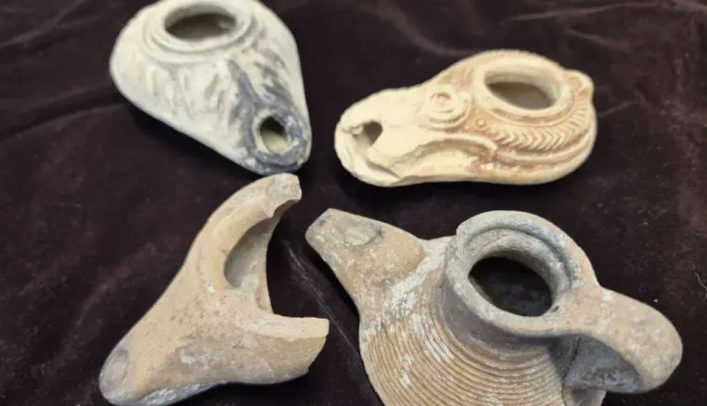
Artifacts from the cave are now exhibited at the Jay and Jeanie Schottenstein National Campus for the Archaeology of Israel in Jerusalem, as part of the exhibition “Criminal Past,” which highlights the battle against antiquities looting.
The exhibition showcases the efforts of the Antiquities Authority’s Theft Prevention Unit—often referred to as Israel’s “Antiquities Police”—working tirelessly to safeguard the nation’s heritage from criminal networks seeking to erase or profit from history.
The unearthing of this workshop stands as both an archaeological triumph and a decisive blow against those attempting to plunder history. Beneath Jerusalem’s soil, the enduring story of Jewish life continues to emerge—protected and preserved.