
Limited progress claimed while Tehran stages drills and Washington keeps military options ready.
Iran and the United States held a fresh round of indirect nuclear negotiations Tuesday in Geneva, marking another attempt to defuse tensions surrounding Tehran’s nuclear programme.
Iranian Foreign Minister Abbas Araqchi said both sides reached a general understanding on “guiding principles,” but acknowledged that substantial work remains before any agreement text is finalized.
The talks, mediated by Oman and conducted under tight security, come amid heightened regional military activity.
Even as negotiations proceeded, Iran conducted live-fire missile drills in and around the Strait of Hormuz — a critical maritime corridor through which roughly one-fifth of global oil shipments transit.
Iran’s elite Islamic Revolutionary Guard Corps led the exercises. Authorities temporarily closed parts of the waterway for safety during the drills.
Tehran has repeatedly warned that it could shut the strait to commercial shipping in the event of a military confrontation.
Trump Signals Indirect Role
Donald Trump said he would be “indirectly” involved in the negotiations and expressed belief that Tehran is motivated to reach a deal.
“I think they want to make a deal,” Trump said, adding that consequences would follow if diplomacy fails.
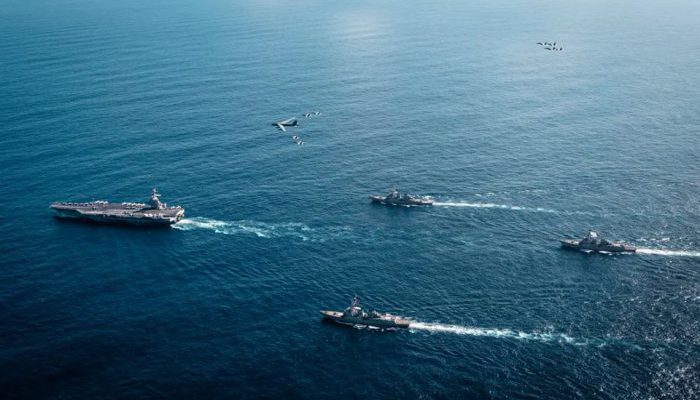
Washington has increased military deployments to the region and maintains that military options remain available should talks collapse.
Khamenei Reaffirms Nuclear Rights
Ali Khamenei reiterated that nuclear energy and enrichment are sovereign rights under international frameworks, including the Nuclear Non-Proliferation Treaty.
He described Iran’s nuclear programme as peaceful and civilian in purpose, covering energy, healthcare, and agriculture. He also warned against coercive pressure, stating that threats would not dictate outcomes.
Core Dispute: Enrichment and Scope
The central sticking point remains uranium enrichment. The United States seeks strict limitations to prevent weaponization pathways and has pushed to broaden discussions to include Iran’s missile programme and regional activities.
Tehran has rejected expanding the agenda and insists enrichment will not be fully abandoned.
Israel has long argued that Iran is pursuing nuclear weapons capability, while Iran maintains its programme is exclusively civilian.
Diplomatic Crossroads
With missile drills underway and aircraft carriers deployed, the Geneva talks unfold against a backdrop of visible deterrence and competing red lines.
Whether the newly agreed “guiding principles” evolve into a formal accord — or whether escalation prevails — will likely shape Middle East stability and global energy markets in the months ahead.