
Historic 6-3 Ruling Declares President Overstepped Authority Under 1977 Emergency Law
In a major constitutional showdown, the Supreme Court of the United States delivered a sharp rebuke to the Trump administration, ruling that the president’s sweeping global tariffs were not authorized under federal law.
In a 6–3 decision, the Court concluded that the International Emergency Economic Powers Act (IEEPA) does not grant the president unilateral authority to impose broad-based tariffs under the banner of a national emergency. The 1977 statute permits the executive branch to regulate or prohibit specific international financial transactions during genuine emergencies, but the majority held that it does not extend to restructuring global trade policy through blanket tariffs.
The ruling marks a significant limitation on executive power and reinforces Congress’s constitutional authority over trade and taxation.
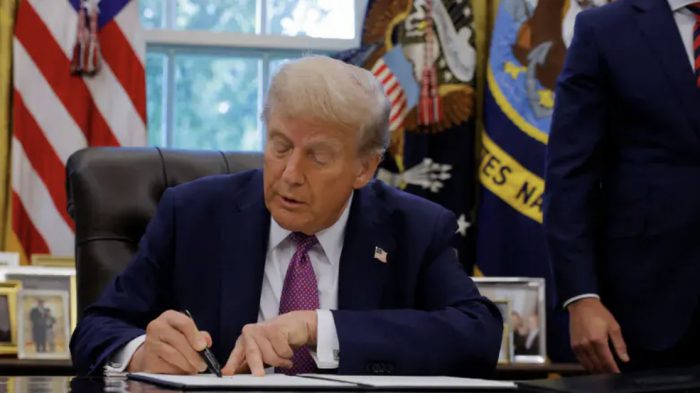
The decision represents a legal setback for former President Donald Trump, whose administration had argued that the tariffs were justified under emergency economic authority. The Court’s majority rejected that interpretation, emphasizing that emergency powers must be narrowly applied and cannot override explicit congressional control of tariff policy.
Three conservative justices dissented: Clarence Thomas, Samuel Alito, and Brett Kavanaugh. Their dissent signaled disagreement over the scope of presidential emergency powers and the interpretation of statutory authority.
Legal analysts say the ruling could have far-reaching implications for future administrations, particularly in how emergency economic powers are invoked during geopolitical or financial crises. The judgment reinforces judicial scrutiny over executive action and underscores the constitutional balance between the White House and Capitol Hill.
The decision now shifts attention back to Congress, which retains primary authority to regulate tariffs and international trade policy.