Israel’s Security Tested As Terror Group Accepts Peacekeepers But Rejects Disarmament And Accountability.
In the wake of the inaugural session of US President Donald Trump’s newly established “Board of Peace,” Hamas has publicly declared openness to international peacekeeping forces in Gaza — but only under strict conditions that shield its grip on power.
The proposal, unveiled in Washington, includes the creation of a 20,000-strong International Stabilization Force (ISF) alongside a newly trained Palestinian police structure aimed at restoring order in post-war Gaza. The initiative follows the October ceasefire brokered by the United States, Qatar, and Egypt after two years of devastating conflict between Israel and Hamas.
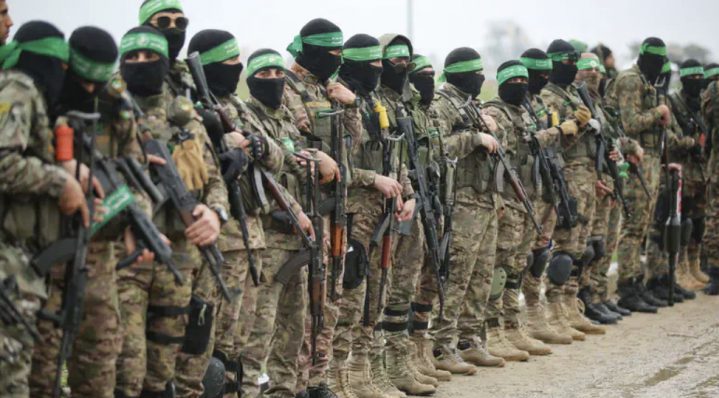
Yet while Hamas spokesperson Hazem Qassem claimed the group supports forces that “monitor the ceasefire,” he insisted they must not interfere in Gaza’s “internal affairs.” In practice, this translates into a demand that peacekeepers act as buffers against Israel — without challenging Hamas’ armed infrastructure.
Former UN envoy Nickolay Mladenov, appointed as high representative for Gaza under the US plan, confirmed recruitment efforts for a post-Hamas police force. However, Hamas has categorically refused to disarm — directly contradicting a central pillar of the peace framework.
Senior Hamas leader Khaled Mashaal reiterated that surrendering weapons is “not an option,” framing disarmament as capitulation. This stance reinforces Israel’s long-held position: peace cannot coexist with armed militancy entrenched inside civilian infrastructure.
Israel has consistently maintained that any lasting stability in Gaza requires the dismantling of terrorist capabilities — not cosmetic adjustments under international supervision. Allowing heavily armed factions to operate freely while international forces patrol perimeters risks entrenching instability rather than ending it.
Trump’s stabilization initiative represents a bold attempt to reshape Gaza’s governance model. But unless Hamas relinquishes its weapons and control mechanisms, international deployments may serve merely as observers to an unresolved threat.