

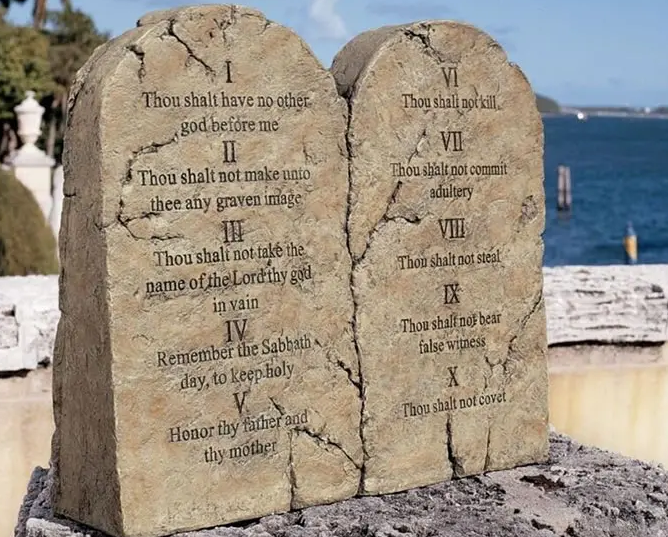
In a decisive judicial victory, Louisiana secures right to restore historic moral foundations in classrooms despite fierce secular opposition and activist legal challenges.
The United States Court of Appeals for the Fifth Circuit has delivered a landmark decision allowing Louisiana to move forward with enforcing HB 71, a law requiring the Ten Commandments to be displayed in public school classrooms across the state. The full court voted 12–6 to lift a lower court injunction that had blocked implementation after Governor Jeff Landry signed the measure into law in June 2024.
The ruling represents a major setback for the American Civil Liberties Union, which had quickly filed suit claiming the law violated the First Amendment’s Establishment Clause. Civil rights groups argued that students would be exposed to a religious message within compulsory educational environments.
However, the appeals court concluded that it was premature to rule on the constitutionality of the law before it had actually been implemented, effectively allowing Louisiana to proceed.
Joseph Davis, senior counsel for the state, welcomed the decision, stating that efforts to remove religious expression from public life conflict with America’s historic traditions and constitutional framework.
Under HB 71, schools from elementary through post-secondary institutions must display a poster-sized copy of the Ten Commandments alongside an explanatory statement detailing their historical influence on American law and government. The legislation also permits schools to display other foundational texts such as the Declaration of Independence and the Mayflower Compact, reinforcing the broader historical context.
House Speaker Mike Johnson of Louisiana has publicly backed the measure, expressing confidence that the law will withstand further judicial scrutiny. He characterized the display requirement as a positive affirmation of America’s legal heritage rather than an act of religious imposition.
Legal observers note that the case may ultimately advance to the Supreme Court, where broader questions regarding the role of historical religious texts in public institutions could be revisited. For now, Louisiana stands at the forefront of a growing national debate as other states examine similar legislative initiatives.