Estonia joins France, Germany and Austria warning rhetoric threatens credibility of UN human rights system.
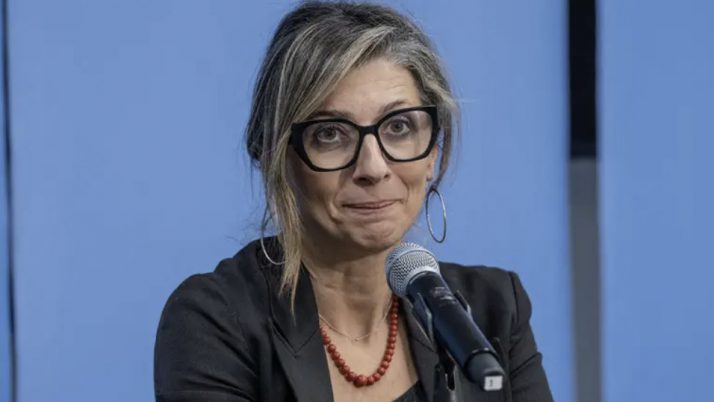
Estonia has joined a growing number of European governments raising alarm over statements made by Francesca Albanese, the United Nations Special Rapporteur on the Palestinian territories, warning that her rhetoric risks undermining the credibility of the UN human rights system.
In a formal statement, the Estonian Ministry of Foreign Affairs reaffirmed strong support for the UN’s human rights pillar and the independence of its Special Procedures system. At the same time, it expressed serious concern over several positions taken by Albanese and called for restraint in language that could erode constructive and balanced engagement. The ministry emphasized that without such balance, the mandate itself cannot be effectively carried out.
Estonia’s remarks follow sharp criticism from other European leaders. Johann Wadephul condemned what he described as repeated outbursts and declared Albanese untenable in her position after she characterized Israel in sweeping and inflammatory terms. Beate Meinl-Reisinger similarly criticized her language, arguing that while policy criticism is legitimate, broad denunciations undermine the impartiality required of a UN representative.
France also delivered an unusually direct rebuke. Jean-Noel Barrot stated that Paris unreservedly condemned remarks directed not merely at the Israeli government but at Israel as a people and a nation. He said such statements were unacceptable and added that they compounded previous controversial positions attributed to Albanese. More than twenty French lawmakers subsequently called for her removal.
The controversy intensified after remarks delivered at a conference in which Albanese suggested that global political and financial backing of Israel reflected a broader systemic failure. Critics interpreted her language as framing Israel as a collective adversary. Albanese later denied ever describing Israel as a common enemy of humanity, calling such accusations false.
Her tenure has previously drawn scrutiny over social media comments in which she referenced the “Jewish lobby” and over statements following the October 7 Hamas massacre. She has also been criticized for not explicitly calling for the release of hostages abducted by Hamas while advocating for the release of certain detainees in Gaza.
The mounting criticism reflects a wider debate within Europe about the boundaries between legitimate policy critique and rhetoric perceived as delegitimizing a UN member state. As governments publicly question her impartiality, pressure is increasing on the UN system to safeguard both independence and credibility within its human rights framework.