

Survey reveals strong public backing for diplomacy strength while rejecting dependence on Arab factions decisively.
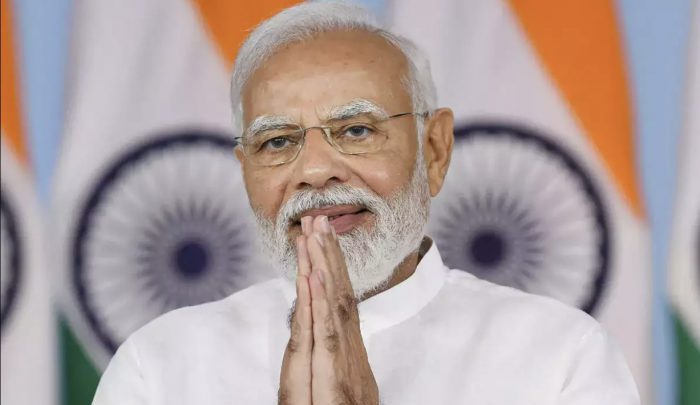
A new survey conducted by the Lazar Research Institute for the Maariv indicates that a clear majority of Israelis disapproved of the opposition’s decision to boycott the ceremonial session at the Knesset honoring Indian Prime Minister Narendra Modi. According to the findings, 53 percent of respondents said the boycott was wrong, while 24 percent supported the move and 23 percent expressed no opinion.
The poll also revealed strong public concern regarding regional security. Fifty-nine percent of Israelis believe that avoiding a United States strike on Iran would constitute a very bad outcome for Israel, reflecting deep anxiety about Tehran’s ambitions and the strategic balance in the region.
In the political arena, the numbers suggest continued fragmentation within the opposition bloc. In most scenarios tested, including a potential joint run by Naftali Bennett and Gadi Eizenkot, the anti-government bloc remains at 60 seats, compared to 50 for the coalition and 10 for Arab parties. Under this distribution, opponents of Prime Minister Benjamin Netanyahu would be unable to form a government without relying on Arab factions.
In a scenario without party mergers, Likud receives 26 seats, Bennett’s party 19, Yesh Atid with Eizenkot 14, the Democrats 11, Otzma Yehudit 9, Yisrael Beytenu 8, Shas 8, United Torah Judaism 7, Hadash-Ta’al 5 and Ra’am 5. Blue and White, Religious Zionism, the Reservists and Balad fail to cross the electoral threshold.
A separate joint-list scenario would further weaken the anti-government bloc to 57 seats, with the right-wing bloc at 49 and Arab parties collectively rising to 14 seats, reinforcing the arithmetic reality that any alternative coalition would depend on external Arab political support.
The data highlights a public mood that favors national cohesion on foreign affairs and security while remaining skeptical of political maneuvers perceived as undermining diplomatic stature or strategic deterrence.