

Parshat Tetzaveh reveals garments as vessels of holiness, elevating service beyond ego and vanity.
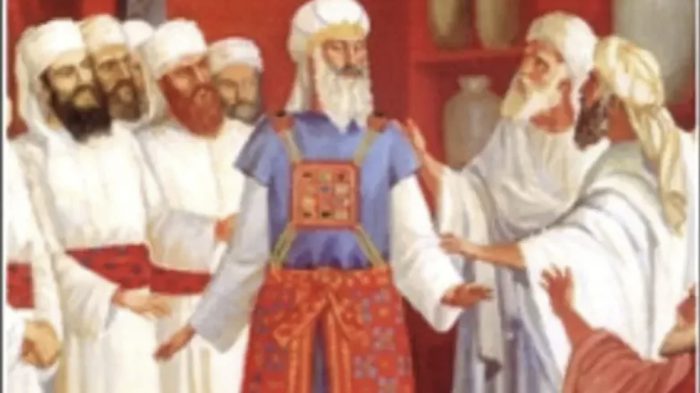
This week’s Parsha, Tetzaveh, continues the majestic narrative of the Mishkan, turning our attention to the sacred garments worn by the Kohanim during their service. The Torah details with precision the vestments of the ordinary Kohein, who wore four garments, and the Kohein Gadol, who wore eight. These were not decorative embellishments but indispensable elements of the Avodat HaKodesh. Without them, a Kohein could not perform the service. His role, and even his state of sanctity, remained incomplete unless clothed in the prescribed attire.
At first glance, this emphasis on clothing appears surprising. Judaism generally resists obsession with externals, especially in a world where fashion dominates culture and industries thrive on constant reinvention of image. Modern society encourages people to replace perfectly good garments simply because trends have shifted. Clothing becomes a tool of identity construction, a projection of self.
Yet clothing carries deep psychological meaning. Every individual possesses a sense of uniqueness and seeks to express it outwardly. A person’s “look” becomes part of their public narrative. New garments can uplift the spirit, refresh one’s image, and even influence mood. The excitement surrounding a sale or clearance event reveals how strongly clothing is tied to emotion and self-perception.
The Torah does not reject this human reality. It refines it. Dressing well is not inherently wrong. Judaism does not demand neglect or denial. Rather, it teaches balance. The principle of Tzniut channels the desire for self-expression into a framework of dignity and restraint. Modesty is not merely about covering the body. It is about aligning the external with the internal, ensuring that clothing reflects self-respect rather than vanity.
True Tzniut transforms fashion into an expression of spiritual awareness. A refined appearance can honor the divine image within each person. However, danger arises when one embraces the philosophy that clothes define identity. External appearance must never substitute for inner growth. A person may adopt religious attire and feel righteous, yet neglect the demanding labor of character development. When image replaces substance, illusion replaces authenticity.
This understanding illuminates the priestly garments. Before entering sacred service, the Kohein removed his ordinary clothes, symbolic of the superficial layers of personality. He stood not as an individual projecting personal style, but as a servant of Hashem. The holy garments elevated the moment, not the ego. They reminded both priest and people that the service was performed before the Divine Presence.
The Torah declares, “You shall make holy garments for Aharon your brother, for honor and for glory.” The Ramban explains that these garments resembled royal attire, akin to Yosef’s special coat and the ornate robes of royal figures. The Kohein Gadol appeared majestic, radiant with color and craftsmanship. Yet the glory did not belong to him. It testified to the greatness of the One he served.
The splendor of the vestments proclaimed that Hashem dwells among Bnei Yisrael. The honor was not personal status but sacred responsibility. True glory emerges when a person aligns with the divine will and shapes his character in pursuit of truth.
Parshat Tetzaveh teaches that clothing can elevate or deceive. When guided by humility and purpose, it becomes a vessel of holiness. When driven by ego, it becomes a mask. The essential honor of a human being lies not in fabric, but in forging a soul refined by integrity and devotion.
May we merit to cultivate that inner glory, allowing our outward appearance to reflect the quiet majesty of a life lived in the service of Hashem.