
Tehran denies access to bombed sites, raising urgent fears over hidden enrichment and regional stability.
A confidential report from the International Atomic Energy Agency circulated to member states and obtained by The Associated Press reveals that Iran has refused to grant inspectors access to nuclear facilities struck during last June’s 12-day war involving Israel and the United States.
According to the report, the IAEA cannot verify whether Iran has suspended uranium enrichment activities or determine the precise size and composition of its enriched uranium stockpile due to the continued denial of access. While Iran has four declared enrichment facilities, inspectors currently lack direct oversight of the bombed sites, creating what the agency described as a “loss of continuity of knowledge” regarding Tehran’s nuclear program.
Under the Nuclear Non-Proliferation Treaty, Iran is obligated to cooperate fully with the IAEA. However, Tehran suspended formal cooperation following the June conflict, arguing in a February 2 letter that standard safeguards had become “legally untenable and materially impracticable” in light of what it described as threats and acts of aggression. Although inspectors have reportedly accessed some unaffected facilities at least once since mid-2025, key enrichment locations remain off limits.
The IAEA estimates that Iran now possesses approximately 440.9 kilograms of uranium enriched to 60 percent purity, a level technically close to weapons-grade material, which begins at roughly 90 percent. Agency Director General Rafael Grossi has clarified that Iran does not currently possess nuclear weapons, yet the accumulation of such material significantly reduces breakout time if Tehran were to decide to weaponize.
In the absence of on-site inspections, the agency has relied on commercial satellite imagery. At the Isfahan complex, roughly 350 kilometers southeast of Tehran, analysts observed regular vehicular activity near underground tunnel structures believed to store enriched material. Activity was also detected at Natanz and Fordow enrichment sites, but without physical access, inspectors cannot confirm operational status or intent.
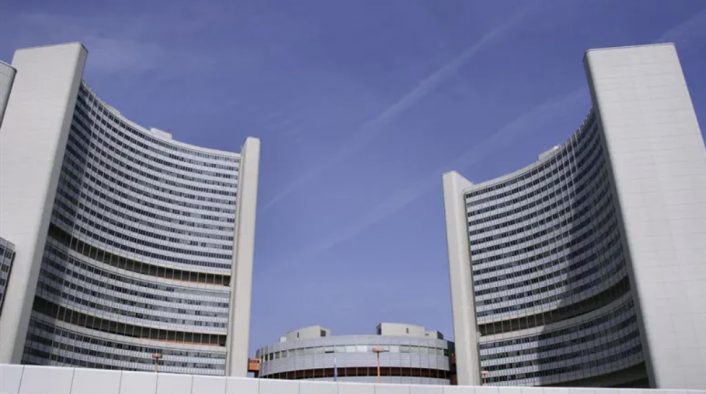
Grossi participated in recent US-Iran nuclear discussions in Geneva on February 17 and February 26, offering technical advice regarding verification mechanisms. While no agreement emerged from the latest talks, Iranian Foreign Minister Abbas Araghchi indicated progress and announced that technical negotiations would resume in Vienna next week. US officials characterized the meetings as constructive.
For Israel, which has long warned of Iran’s advancing enrichment capabilities, the current verification gap underscores a familiar concern: without transparent inspections and enforceable safeguards, uncertainty itself becomes a strategic risk. The coming weeks of diplomacy may prove decisive in determining whether monitoring resumes or whether opacity deepens around one of the region’s most volatile security files.