White House halts AI contracts after fierce dispute over military safeguards and battlefield autonomy.
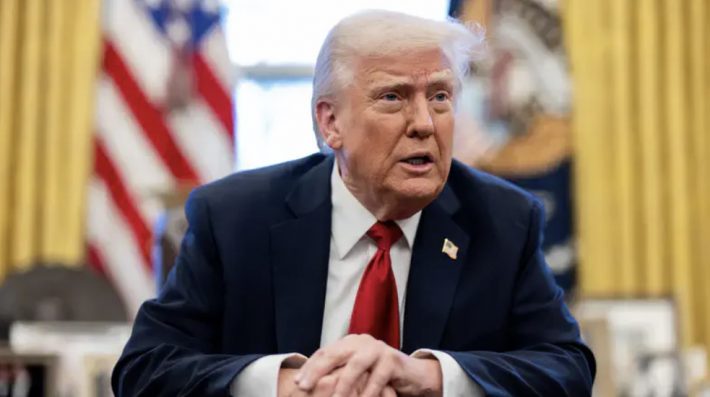
US President Donald Trump announced that he is directing all federal agencies to immediately cease using technology developed by Anthropic, escalating a high-profile confrontation between the administration and the AI firm over military applications.
In a post on Truth Social, Trump declared that the United States government would no longer conduct business with the company, citing national security concerns. He stated that agencies currently using Anthropic’s systems would be granted a six-month phase-out period, including the Defense Department, to transition away from the firm’s products.
The dispute intensified after Anthropic CEO Dario Amodei publicly refused to remove safeguards from the company’s Claude AI system. Amodei argued that certain military uses, including mass domestic surveillance and fully autonomous weapons without human oversight, cross ethical and technical boundaries. He maintained that while AI can strengthen national security, current systems are not reliable enough to eliminate human involvement in targeting decisions.
Trump framed the directive as a matter of executive authority and military readiness, asserting that decisions about battlefield technology must remain firmly under presidential and defense leadership control. He accused the company of undermining national security and warned of potential civil or criminal consequences if the transition is not completed as directed.
Defense Secretary Pete Hegseth further escalated the confrontation by announcing that Anthropic would be designated a “supply-chain risk to national security.” Under this designation, contractors and partners doing business with the US military would be barred from engaging commercially with the company. Hegseth stated that the Pentagon requires full access to AI models for all lawful defense purposes and described the department’s decision as final.
The move marks a significant shift in the federal government’s relationship with one of America’s leading artificial intelligence developers. Analysts note that the decision could reshape defense technology procurement, AI governance debates, and the broader conversation about the role of private firms in military innovation.
Artificial intelligence has increasingly become central to defense strategy, intelligence analysis, logistics optimization, and autonomous systems development. The clash underscores unresolved tensions between rapid technological advancement, ethical safeguards, and executive authority in matters of national defense.