
Washington asserts decisive leadership supporting Israel while exposing Iran’s nuclear ambitions and failed negotiations.
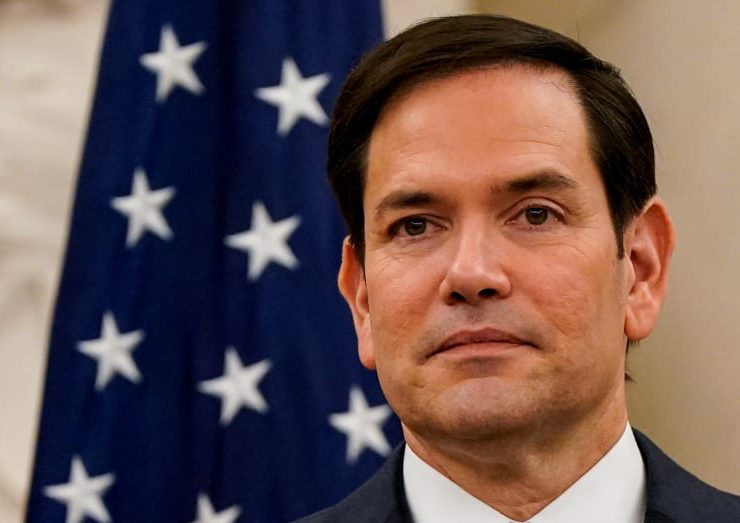
Marco Rubio moved to clarify remarks that had been interpreted by some commentators as suggesting that Israel pushed the United States into its current conflict with Iran. Speaking to reporters on Capitol Hill before classified briefings to members of Congress, the US Secretary of State emphasized that the decision to confront Iran’s military capabilities was made independently by the United States after determining that diplomacy had failed.
Rubio explained that the strategic decision was ultimately taken by Donald Trump, who concluded that Iran’s growing missile capabilities and nuclear ambitions posed an unacceptable threat. According to Rubio, the administration determined that waiting for a potential attack was not a viable strategy and that action was necessary to prevent a dangerous escalation.
The clarification came after questions about comments made during Trump’s meeting with Friedrich Merz at the Oval Office. During that exchange, Trump responded to a reporter’s question about whether Israel had influenced the United States’ decision to strike Iran. The president replied that, if anything, he may have encouraged Israel’s readiness rather than the other way around.
Rubio reinforced that message while addressing reporters. He explained that once the president concluded negotiations with Iran were unlikely to succeed, the administration determined that the regime would not be allowed to shield itself behind its ballistic missile program. The goal, he said, was to prevent the possibility of the United States or its allies being struck first.
The statement came as the conflict between Iran and the combined forces of the United States and Israel entered its fourth day. Trump signaled that the window for diplomacy had effectively closed, stating publicly that it was now “too late” for Tehran to attempt negotiations following the strikes that damaged significant parts of its military infrastructure.
Posting on the social media platform Truth Social, Trump declared that Iran’s air defense systems, air force capabilities, naval assets and elements of its leadership structure had already been severely weakened. He suggested that Tehran’s sudden interest in talks came only after suffering major military setbacks.
Further insight into the failed diplomatic efforts was provided by Trump’s envoy Steve Witkoff during an interview with Sean Hannity on Fox News. Witkoff revealed that Iranian negotiators openly boasted during discussions about their ability to produce multiple nuclear weapons using their existing enriched uranium stockpile.
According to Witkoff, Iranian officials stated that they controlled approximately 460 kilograms of uranium enriched to 60 percent purity, a level that experts say is dangerously close to weapons-grade material. The negotiators reportedly suggested that this stockpile could theoretically be used to produce as many as eleven nuclear bombs.
Witkoff described the tone of the negotiations as confrontational rather than cooperative. He explained that the American delegation quickly concluded that Iranian representatives were not seriously interested in reaching a genuine agreement to curb their nuclear ambitions.
The envoy said the Trump administration had set clear objectives for any potential deal. These included dismantling Iran’s ballistic missile program, ending its support for militant proxy groups across the Middle East, eliminating threats to international shipping in the Gulf of Hormuz and halting uranium enrichment capable of producing nuclear weapons.
Despite several rounds of discussions, Witkoff said it became clear that Tehran was unwilling to accept these conditions. He noted that the second meeting already revealed deep differences between the two sides, and a final attempt at dialogue failed to produce meaningful progress.
The revelations have strengthened the administration’s argument that military action became unavoidable after diplomacy collapsed. American officials argue that allowing Iran to continue expanding its missile and nuclear capabilities while maintaining its network of militant proxies would have created a far greater strategic threat to both the United States and Israel.
By clarifying the sequence of decisions that led to the strikes, Rubio sought to emphasize that Washington acted based on its own assessment of the threat posed by Tehran. The message from the administration is that the United States did not enter the conflict under external pressure but rather out of a determination to protect its national security interests and those of its closest allies.