Iran’s revolutionary ideology glorifies martyrdom and deception, driving relentless hostility toward Israel and Western civilization.
Many Western observers struggle to grasp the ideological motivations driving Iran and its network of militant proxies. Calls for Western audiences to “think like a Shiite” often sound provocative or exaggerated. Yet analysts who have studied Hezbollah fighters in Lebanon or researched the ideological roots of Iran’s leadership argue that understanding this mindset is essential for interpreting Tehran’s strategic behavior.
Western governments and commentators frequently approach Middle Eastern conflicts through a rational, liberal framework that assumes political actors ultimately seek stability, compromise, and lasting peace agreements. However, the ideological worldview shaping Iran’s ruling clerical regime operates under a fundamentally different framework, one heavily influenced by religious narratives of sacrifice, redemption, and struggle.
Within this perspective, agreements with adversaries are often viewed not as permanent settlements but as tactical pauses. The concept sometimes described as a “Hudna,” or temporary truce, allows time for regrouping, rebuilding military capability, and preparing for future confrontation under more favorable conditions. Critics argue that this mindset explains why diplomatic agreements alone rarely alter the long-term strategic ambitions of revolutionary regimes driven by ideological objectives.
A key element shaping this worldview is the central role of martyrdom in Shia historical consciousness. In Western societies, suicide attacks are widely seen as irrational acts of despair. In radicalized militant interpretations of Shia ideology, however, sacrificial death can be framed as a noble act that ensures spiritual reward and contributes to a larger religious struggle.
Strategic Patience
Temporary truces or agreements may be used to rebuild strength before renewed conflict.
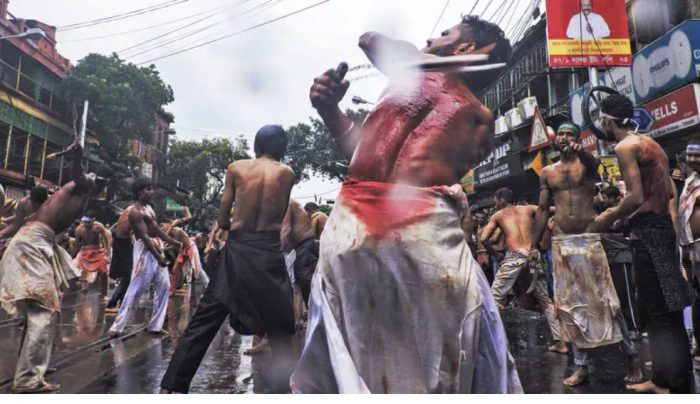
The Battle of Karbala in 680 AD, in which Hussein ibn Ali—the grandson of Prophet Muhammad—was killed alongside a small group of followers, occupies a central role in Shia religious identity. The event is commemorated annually during the mourning rituals of Ashura. For believers, the story represents the ultimate example of standing against tyranny despite overwhelming odds.
Over centuries, this narrative has shaped a culture that blends grief, resistance, and a belief that suffering for a righteous cause carries profound spiritual significance. The martyr figure, or “Shahid,” becomes a symbol of unwavering commitment to justice and divine purpose.
Following the Iranian Islamic Revolution of 1979, this historical narrative was increasingly incorporated into state ideology. Iran’s leadership framed political struggle against Western influence and Israel as part of a broader spiritual confrontation. Instead of passively awaiting redemption, followers were encouraged to actively prepare the world for the arrival of the Hidden Imam through revolutionary governance and resistance against perceived enemies.
From this perspective, actions that may appear irrational or self-destructive to Western analysts can be interpreted within the ideological framework as meaningful sacrifice in a cosmic struggle. This divergence in worldview often produces deep misunderstandings in diplomacy and strategic planning.
The persistence of this ideological framework suggests that lasting stability in the region may depend not only on military deterrence but also on fundamental political change within regimes driven by revolutionary religious doctrines.Strategic Patience
Temporary truces or agreements may be used to rebuild strength before renewed conflict.
The Battle of Karbala in 680 AD, in which Hussein ibn Ali—the grandson of Prophet Muhammad—was killed alongside a small group of followers, occupies a central role in Shia religious identity. The event is commemorated annually during the mourning rituals of Ashura. For believers, the story represents the ultimate example of standing against tyranny despite overwhelming odds.
Over centuries, this narrative has shaped a culture that blends grief, resistance, and a belief that suffering for a righteous cause carries profound spiritual significance. The martyr figure, or “Shahid,” becomes a symbol of unwavering commitment to justice and divine purpose.
Following the Iranian Islamic Revolution of 1979, this historical narrative was increasingly incorporated into state ideology. Iran’s leadership framed political struggle against Western influence and Israel as part of a broader spiritual confrontation. Instead of passively awaiting redemption, followers were encouraged to actively prepare the world for the arrival of the Hidden Imam through revolutionary governance and resistance against perceived enemies.
From this perspective, actions that may appear irrational or self-destructive to Western analysts can be interpreted within the ideological framework as meaningful sacrifice in a cosmic struggle. This divergence in worldview often produces deep misunderstandings in diplomacy and strategic planning.
The persistence of this ideological framework suggests that lasting stability in the region may depend not only on military deterrence but also on fundamental political change within regimes driven by revolutionary religious doctrines.