
Washington signals decisive influence in Iran’s succession as Israel-US alliance seeks stable leadership after regime collapse.
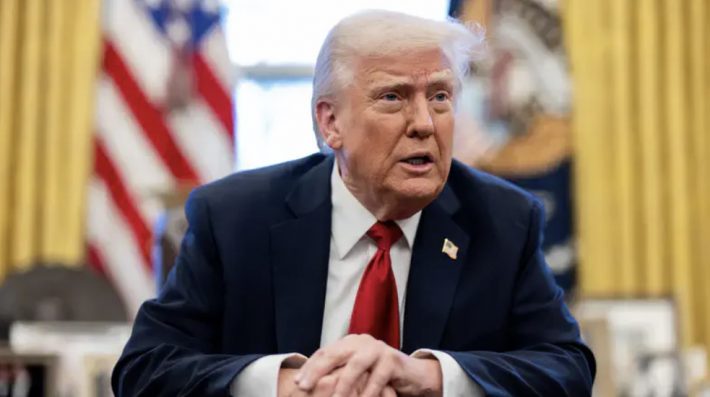
U.S. President Donald Trump said he believes Washington must be personally involved in determining Iran’s next supreme leader following the assassination of Ali Khamenei during the ongoing war.
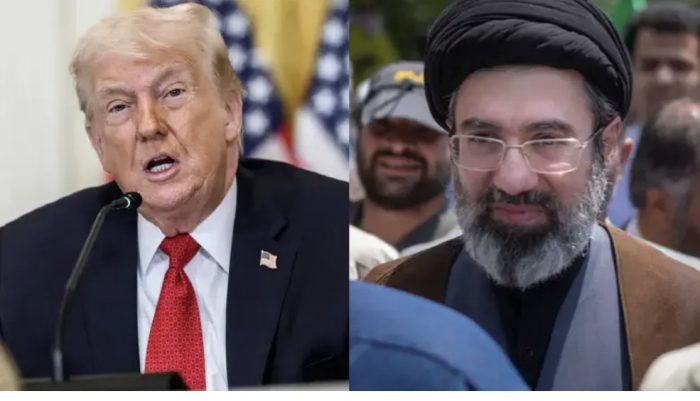
In an eight-minute interview with Axios, Trump strongly rejected the possibility that Khamenei’s son, Mojtaba Khamenei, could succeed his father.
“They are wasting their time. Khamenei’s son is a lightweight,” Trump said, adding that he wants a leader who would guide Iran toward peace rather than confrontation.
He warned that installing a successor who continues the previous regime’s policies could lead to renewed conflict between Iran and the United States within a few years.
Iran Faces Leadership Crisis After Khamenei’s Death
The killing of Ali Khamenei during joint U.S.–Israeli strikes triggered a major political crisis inside Iran, with factions within the clerical establishment debating who should lead the country next.
Although no official successor has been announced, Mojtaba Khamenei—considered influential among elements of the Islamic Revolutionary Guard Corps—has emerged as a leading candidate.
Trump dismissed that possibility, stating that Washington would not accept a continuation of the same ideological leadership that has fueled decades of confrontation with the West.
According to reports, Iranian officials have delayed the announcement of a successor while internal negotiations continue.
Trump Compares Iran Situation to Venezuela
During the interview, Trump compared the Iranian succession crisis to developments in Venezuela earlier this year.
After U.S. forces captured Venezuelan leader Nicolás Maduro, Vice President Delcy Rodríguez assumed power with Washington’s backing.
Trump described Venezuela as a new partner following the political shift, highlighting the strategic and economic benefits that followed, including increased oil shipments to the United States.
The comparison suggests the administration views Iran’s current instability as a potential opportunity to reshape the country’s leadership and geopolitical direction.
Strategic Stakes for the Middle East
The battle over Iran’s next leader carries enormous implications for regional stability, particularly for Israel, which has long viewed Tehran’s leadership as a central threat.
A successor aligned with the previous regime’s hardline ideology could prolong conflict, while a more pragmatic leadership could reshape the balance of power across the Middle East.
For now, Tehran’s leadership vacuum remains unresolved, with an official announcement expected soon as internal political negotiations continue.