

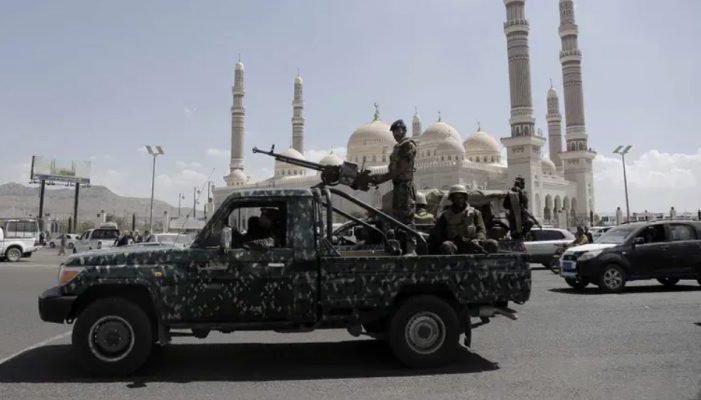
Iran-backed Houthi militants rattle sabers but Israel stands resilient against expanding extremist regional alliance today.
Escalating Threat from Iran’s Regional Proxy Network
The leader of Yemen’s Houthi rebel movement, Abdul Malik al-Houthi, issued a new warning declaring his forces are ready to strike at any moment as tensions intensify across the Middle East.
In a televised address, the Iran-backed militant leader claimed the group’s fighters remain fully prepared for military action. According to his statement, Houthi forces are monitoring the situation closely and could launch attacks immediately if developments in the region demand it.
The Houthis are widely viewed as one of Tehran’s most aggressive regional proxies. Over the past two years, the group has repeatedly attempted to target Israel with missiles and drones, framing their attacks as support for Gaza. Israel has responded decisively, conducting precision strikes that eliminated multiple senior Houthi commanders and disrupted their operational capabilities.
Although Houthi attacks slowed after a temporary Gaza ceasefire in October, the group has continued issuing threats against Israel while strengthening ties with Iran’s broader militant alliance.
Iran’s Expanding “Axis” Strategy
Iran has spent years building a network of armed proxies across the Middle East designed to pressure Israel from multiple directions. These groups often coordinate messaging and strategy with Tehran.
Regional Militant Network
                IRAN
                  │
     ┌────────────┼────────────┐
     │            │            │
 Hezbollah     Houthis       Militias
 (Lebanon)     (Yemen)        (Iraq/Syria)
     │            │            │
  Rocket         Drones      Missiles
  Arsenal        Attacks     Regional Strikes
Strategic Goal:
Encircle Israel through multiple fronts and create constant instability in the region.
Israel’s Response: Deterrence and Precision Strikes
Israel has consistently demonstrated a strategy of rapid retaliation and targeted operations against militant leadership and infrastructure.
Key elements of Israel’s response include:
- Precision airstrikes on militant command centers
- Elimination of senior terrorist leaders
- Missile defense systems intercepting incoming threats
- Intelligence operations disrupting proxy coordination
Despite repeated provocations from Iran-aligned groups, Israel’s defense establishment continues to emphasize deterrence and operational readiness.
Growing Risk of Multi-Front Conflict
Security analysts warn that statements from Houthi leadership reflect a broader effort by Iran’s militant network to expand pressure on Israel while Tehran faces direct confrontation.
The situation raises the possibility of simultaneous escalations across several fronts — including Lebanon, Yemen, Iraq, and Syria — a scenario Israel has been preparing for over the past decade.
For now, Israel remains on high alert while continuing operations designed to neutralize threats before they can escalate into large-scale attacks.