
Investigation reveals UNRWA official allegedly coordinated Hamas terrorists during October 7 massacre targeting Israeli civilians.
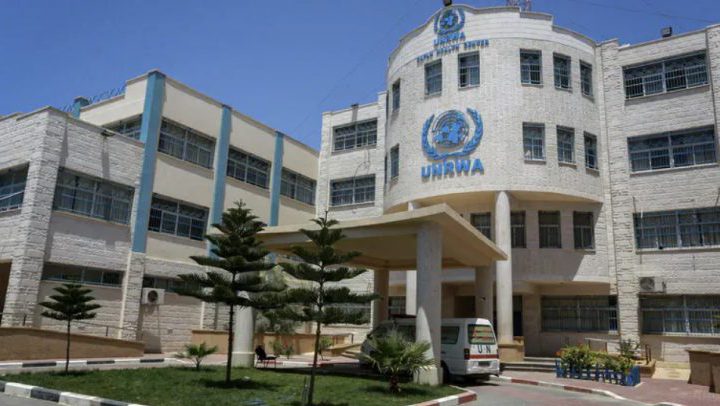
A Gaza school principal employed by the United Nations Relief and Works Agency for Palestine Refugees in the Near East (UNRWA) has been dismissed after investigators uncovered evidence linking him to the October 7, 2023 Hamas terrorist attacks on Israel. The individual, Hafez Mousa Mohammed Mousa, was removed from his position following an investigation that concluded he participated in the assault while serving as a school principal in Gaza.
The findings were revealed in a report issued by the Office of Inspector General of the United States Agency for International Development. The watchdog body described the evidence against Mousa as conclusive and stated that he actively participated in the attacks as a captain in Hamas’s East Jabaliya Battalion. According to the report, Mousa coordinated communications with suspected Hamas members during the assault while holding his position within the UNRWA education system.
Investigators determined that on the morning of October 7 Mousa closed the UNRWA school where he served as principal and contacted at least twenty Hamas militants. According to information cited by the State Department, he instructed the terrorists to infiltrate Israel using vehicles and weapons while the attack was already underway.
Following the investigation, the United States government placed Mousa on a ten-year blacklist, preventing him from participating in American foreign aid programs. UNRWA spokesman Jonathan Fowler confirmed that after allegations were presented by Israeli authorities, the agency placed Mousa on administrative leave without pay in April 2024. After the internal review conducted by the United Nations Office of Internal Oversight Services was completed, his employment was officially terminated on August 20, 2024.
The case has raised broader concerns regarding transparency within the agency. Sources familiar with the inspector general’s investigation stated that investigators requested UNRWA provide the names of employees dismissed for connections to terrorist groups. According to those sources, UNRWA declined to provide that information and refused to disclose the identities of staff members who participated in the October 7 attacks, a move that investigators said obstructed aspects of the inquiry.
UNRWA has faced increasing scrutiny in recent years over allegations that Hamas has infiltrated its operations in Gaza. Criticism intensified after Israel presented intelligence in 2024 suggesting that several UNRWA employees were directly involved in the October 7 attacks. Following those revelations, the United Nations established a review group headed by former French foreign minister Catherine Colonna to examine Israel’s allegations.
The review acknowledged neutrality-related concerns within UNRWA but stated that Israel had not provided sufficient proof that a significant number of the agency’s employees were members of terrorist organizations. Israeli officials strongly rejected that conclusion and argued that intelligence evidence clearly demonstrates Hamas infiltration within international aid structures operating in Gaza.
Despite the ongoing controversy, the International Court of Justice recently ruled that Israel must facilitate humanitarian aid deliveries to the Gaza Strip through United Nations agencies, including UNRWA. The decision drew criticism from both Israel and the United States, which warned that humanitarian systems must be protected from exploitation by terrorist organizations.
The case involving the UNRWA school principal has become one of the most prominent examples cited by critics who argue that stronger oversight and accountability mechanisms are required to ensure that international aid institutions are not infiltrated or used by militant groups operating in conflict zones.