World powers demand Iran halt strikes on Gulf states after destabilizing attacks threaten regional security and energy routes.
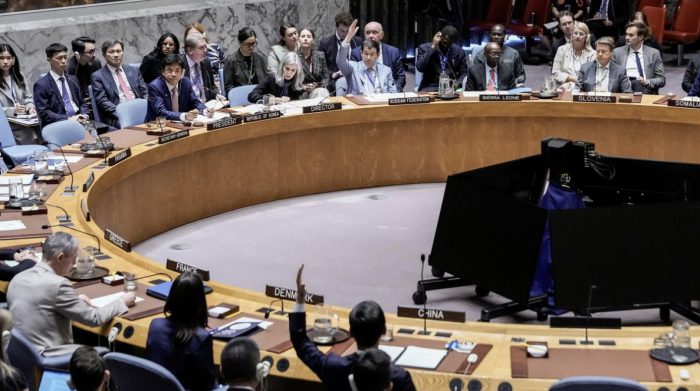
The United Nations Security Council adopted a resolution demanding that Iran immediately stop attacks against several Gulf nations, intensifying international pressure on Tehran amid growing regional tensions.
The resolution passed with 13 votes in favor, while China and Russia abstained. Both countries criticized the wording of the resolution because it did not reference the earlier military strikes carried out by the United States and Israel against Iranian targets.
According to the adopted text, the council demanded “the immediate cessation of all attacks by the Islamic Republic of Iran” against multiple Gulf countries, including Bahrain, Kuwait, Oman, Qatar, Saudi Arabia, the United Arab Emirates, and Jordan.
The resolution also strongly condemned threats by Iran aimed at disrupting international shipping through the strategically critical Strait of Hormuz. The waterway is one of the world’s most important routes for global energy supplies and commercial shipping.
Iran has carried out a series of attacks against Gulf states following a major escalation triggered by the killing of Iranian Supreme Leader Ali Khamenei during a joint military operation by the United States and Israel. The strikes targeted Iranian military and nuclear-linked infrastructure and have continued in recent days.
Tehran has also targeted commercial vessels traveling through the Strait of Hormuz, attempting to pressure international markets and raise the global economic cost of the conflict.
China and Russia, both permanent members of the Security Council with veto power, chose to abstain from the vote rather than support the resolution. Their representatives argued that the resolution was incomplete because it did not address the military actions taken against Iran by the United States and Israel.
Iran’s ambassador to the United Nations, Amir Saeid Iravani, strongly condemned the resolution during the council session. He argued that the measure represented what he described as a misuse of the Security Council’s authority and accused Washington and Jerusalem of using the body to advance political objectives.
Despite the objections, the resolution signals growing international concern about Iran’s expanding attacks across the Gulf region and the potential disruption to one of the world’s most vital energy corridors.