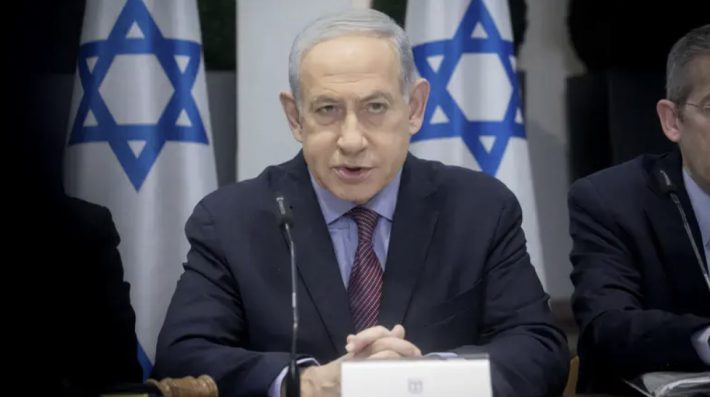
Israel’s decisive offensive dismantles terror networks while exposing weakening Iranian axis and collapsing proxy strength.
Prime Minister Benjamin Netanyahu announced that Israel is decisively reshaping the battlefield across multiple fronts, highlighting major gains against Iran and its proxy networks. Speaking after a high-level military assessment, he emphasized that Israel is no longer reacting to threats but actively dictating the pace and direction of the conflict.
Netanyahu stated that Iran, Hezbollah, and Hamas have all suffered significant degradation, describing them as weakened forces struggling to maintain relevance rather than posing existential threats. He underscored that Israel’s strategy has shifted from defensive responses to proactive, deep-strike operations inside enemy territory.
A key element of this transformation is the establishment of multiple security zones beyond Israel’s borders. These zones now extend across parts of Syria, large sections of Gaza, and expanding areas in southern Lebanon, aimed at neutralizing threats before they reach Israeli territory. According to Netanyahu, this forward-defense posture is critical to preventing future attacks and ensuring long-term security stability.
The Prime Minister also highlighted the elimination of Hezbollah’s former leadership and the dismantling of large-scale missile threats that once targeted Israeli cities. While acknowledging that some residual capabilities remain, he made clear that ongoing operations are focused on fully neutralizing these risks.
Addressing Israeli citizens, particularly those in the north affected by prolonged tensions, Netanyahu called for continued resilience and unity. He reaffirmed government support for impacted communities while praising the sacrifices of Israeli soldiers and reservists who have sustained operations across multiple fronts.
The message from Israel’s leadership is clear: the strategic balance in the region is shifting. Through sustained military pressure and forward-positioned defenses, Israel is not only countering immediate threats but redefining its long-term security doctrine in the face of persistent regional hostility.